Westerscheldt Tunnel Closure: Zeeland Province Doubles Budget for Traffic Measures
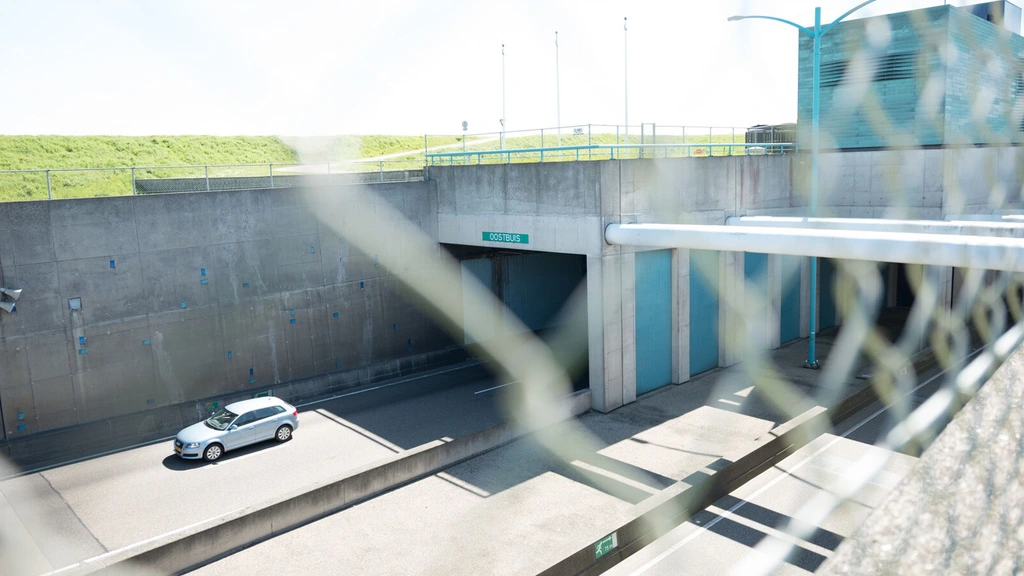
The province of Zeeland will require double the previously estimated funds for traffic management during the upcoming closure of the Westerscheldt Tunnel. Starting in early 2025, the tunnel's east tube will be closed for four months for essential repairs to concrete damage, including a 30-meter crack and a 2-meter broken section discovered three years ago. While the west tube will remain open on a reservation and timed-block basis, it will significantly reduce the tunnel's capacity, allowing only 10,000 vehicles daily compared to the usual 35,000. To mitigate the impact, Zeeland plans to deploy shuttle buses and increase ferry services. Initially, the province anticipated needing 11 million euros for these measures, but this figure has now risen to 22.1 million euros. Approximately 18 million euros will be allocated to transportation and traffic management, with the remainder reserved for unforeseen expenses. The west tube will operate with alternating hourly traffic flow for Terneuzen-Borssele and Borssele-Terneuzen directions, requiring advance reservations. Public transport, collective transport, emergency services, and urgent traffic will receive priority. Regular travelers can utilize shuttle buses connecting to designated parking areas in Borssele and Terneuzen, with free parking for 3,000 and 2,500 cars respectively, and onward connections to nearby train stations. A single bus journey will cost 3 euros. The Westerschelde Ferry service between Breskens and Vlissingen will also be enhanced. The proposed budget increase requires approval from the Provincial States on September 4th. Deputy Harry van der Maas emphasized the necessity of the repairs for the tunnel's safety and future, acknowledging the inconvenience but highlighting the mitigation measures.
The significant budget increase for traffic management during the Westerscheldt Tunnel repairs underscores a common challenge in large-scale infrastructure projects: the underestimation of indirect costs associated with service disruption. While the repair itself is presented as a safety imperative, the doubling of the mitigation budget to 22.1 million euros suggests a potential gap in initial planning or a reassessment of public tolerance for inconvenience. The implementation of a reservation system and timed blocks for the remaining open tunnel tube, alongside enhanced public transport and ferry services, reflects an attempt to balance essential maintenance with maintaining regional connectivity. This situation highlights the complex trade-offs governments face between immediate repair costs, long-term infrastructure integrity, and the economic and social impacts on citizens and businesses. Future infrastructure planning may benefit from more robust scenario modeling that accounts for a wider range of potential disruptions and associated mitigation expenses, especially in the context of increasing transportation demands and the imperative for resilient infrastructure in an evolving climate.
AI-generated to prompt reflection — not editorial opinion, not advice, not a statement of fact. How this works.