What Are Pyrocumulus Clouds and Why Do They Make Wildfires More Deadly?
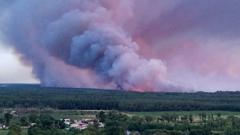
Severe wildfires can generate pyrocumulus clouds, which NASA has described as 'fire-breathing dragon clouds.' These phenomena are more than just a visual spectacle; they represent a significant escalation in the danger posed by wildfires. The intense heat from a large fire can cause air to rise rapidly, carrying smoke, ash, and embers high into the atmosphere. As this superheated air cools and condenses, it can form towering clouds similar to those seen in volcanic eruptions or thunderstorms. These pyrocumulus clouds, sometimes referred to as 'pyrocumulonimbus' if they produce lightning, can create their own weather systems. This includes generating lightning strikes, which can ignite new fires far from the original blaze, thereby spreading the destruction. Furthermore, the turbulent conditions within and around these clouds can lead to unpredictable wind patterns, fanning the flames and accelerating the wildfire's spread. The immense energy involved in their formation signifies a critical threshold where the fire becomes a self-sustaining and even self-propagating event, posing a far greater threat to life and property.
The formation of pyrocumulus clouds during severe wildfires highlights a critical feedback loop where extreme heat transforms a fire event into a self-amplifying phenomenon. This process underscores the escalating intensity of climate-driven wildfires, where natural systems are pushed beyond historical norms. The ability of these clouds to generate lightning and erratic winds demonstrates how such events can transcend their initial boundaries, posing risks far beyond the immediate fire front. Understanding these complex atmospheric interactions is crucial for developing more effective wildfire management and mitigation strategies, particularly as such extreme weather events are projected to become more frequent and intense in the coming decade due to ongoing climate change. This phenomenon demands a re-evaluation of risk assessment and response protocols to account for the potential of fires to generate their own destructive weather.
AI-generated to prompt reflection — not editorial opinion, not advice, not a statement of fact. How this works.