What is a 'convective fire' like the one devastating Gironde?
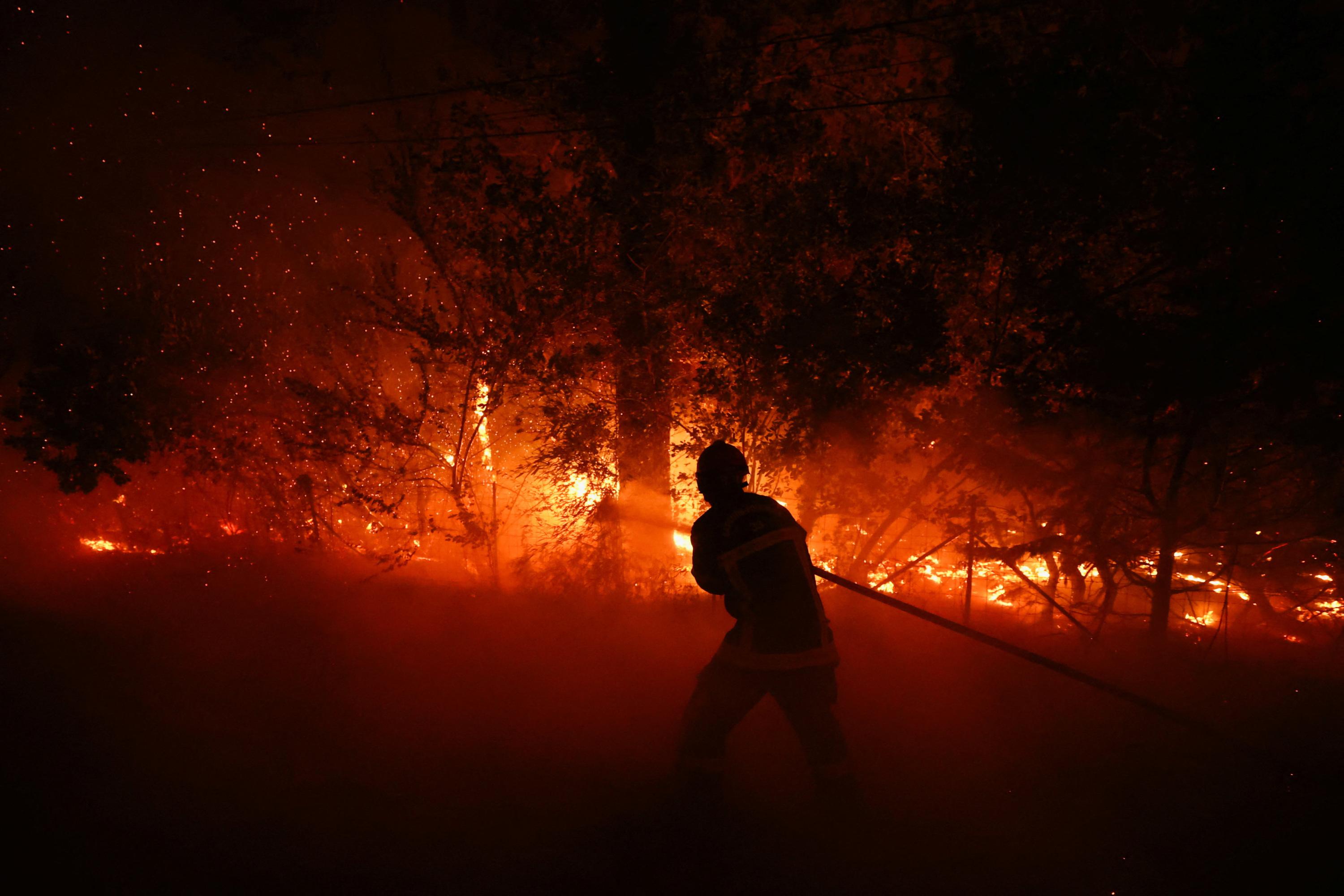
Laurent Nuñez, likely a public official given the context, described the fire ravaging the Gironde region as a "convective fire." He characterized this phenomenon as being of an unprecedented scale. This technical term refers to a mode of fire propagation that is both violent and unpredictable. Such characteristics significantly complicate the efforts of firefighters attempting to bring the blaze under control. The nature of a convective fire suggests a rapid and potentially uncontrollable spread, posing extreme challenges for containment strategies.
The term 'convective fire' points to a phenomenon where heat transfer through fluid motion (in this case, air) plays a dominant role in fire spread. This contrasts with more typical fires driven primarily by radiation or conduction. Understanding this distinction is crucial for predicting fire behavior and optimizing suppression tactics. The unpredictability and violence associated with convective spread highlight the importance of advanced meteorological and fire behavior modeling, especially in the context of climate change, which may increase the frequency and intensity of such extreme events. Future strategies will need to integrate real-time environmental data and sophisticated predictive algorithms to enhance firefighter safety and resource allocation.
AI-generated to prompt reflection — not editorial opinion, not advice, not a statement of fact. How this works.