WhatsApp Introduces @all Mention Feature for Group Chats
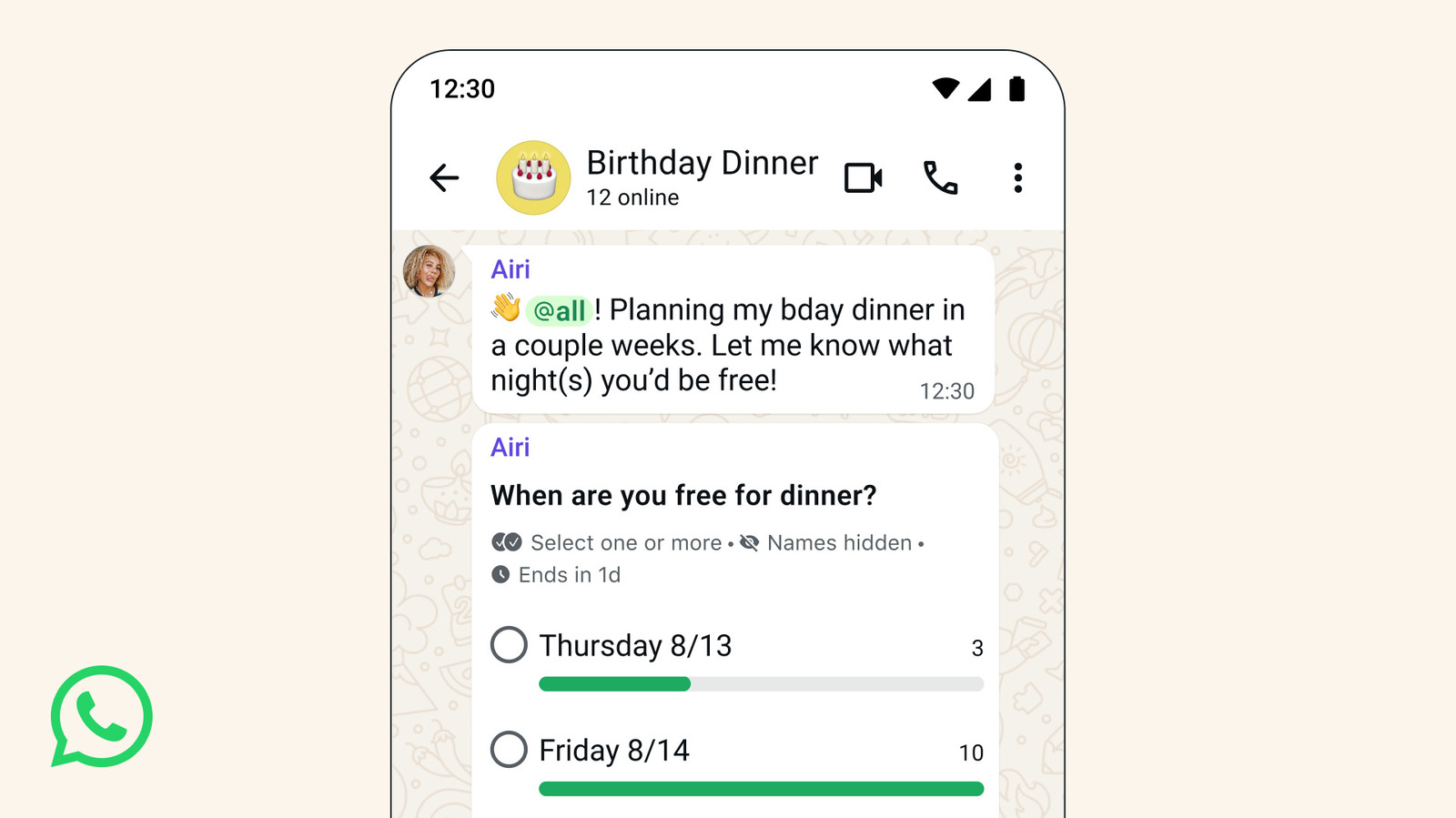
WhatsApp has rolled out a new feature that allows users to mention everyone in a group chat using the '@all' command. This function is designed to notify all participants simultaneously, similar to how '@everyone' works on other platforms. The introduction of this feature aims to streamline communication and ensure important messages are seen by all members of a group. Users can now tag all participants in a group, regardless of the group's size, by simply typing '@all' followed by their message. This functionality is expected to be particularly useful in large or active group chats where important updates might otherwise be missed. The company has not specified any limitations on the use of this feature, leaving its implementation to the discretion of individual users. The potential for overuse, however, has been noted by observers, who suggest it could lead to notification fatigue if not used judiciously. This update is part of WhatsApp's ongoing efforts to enhance its group communication tools.
The introduction of an '@all' mention feature in WhatsApp group chats offers a direct mechanism for broadcasting messages to all members, potentially increasing message visibility and urgency. This functionality addresses the challenge of information dissemination in large or highly active groups. However, it also introduces a risk of notification overload, which could diminish the effectiveness of future alerts if users become desensitized. The platform's design choices now place a greater emphasis on user-driven communication management. Over the next decade, as digital communication tools evolve, the balance between ensuring message reach and respecting user attention will become a critical design consideration for all social platforms. Managing user expectations and providing granular control over notification settings will be key to maintaining a positive user experience.
AI-generated to prompt reflection — not editorial opinion, not advice, not a statement of fact. How this works.
