White House Confirms Trump to Attend 2026 World Cup Final
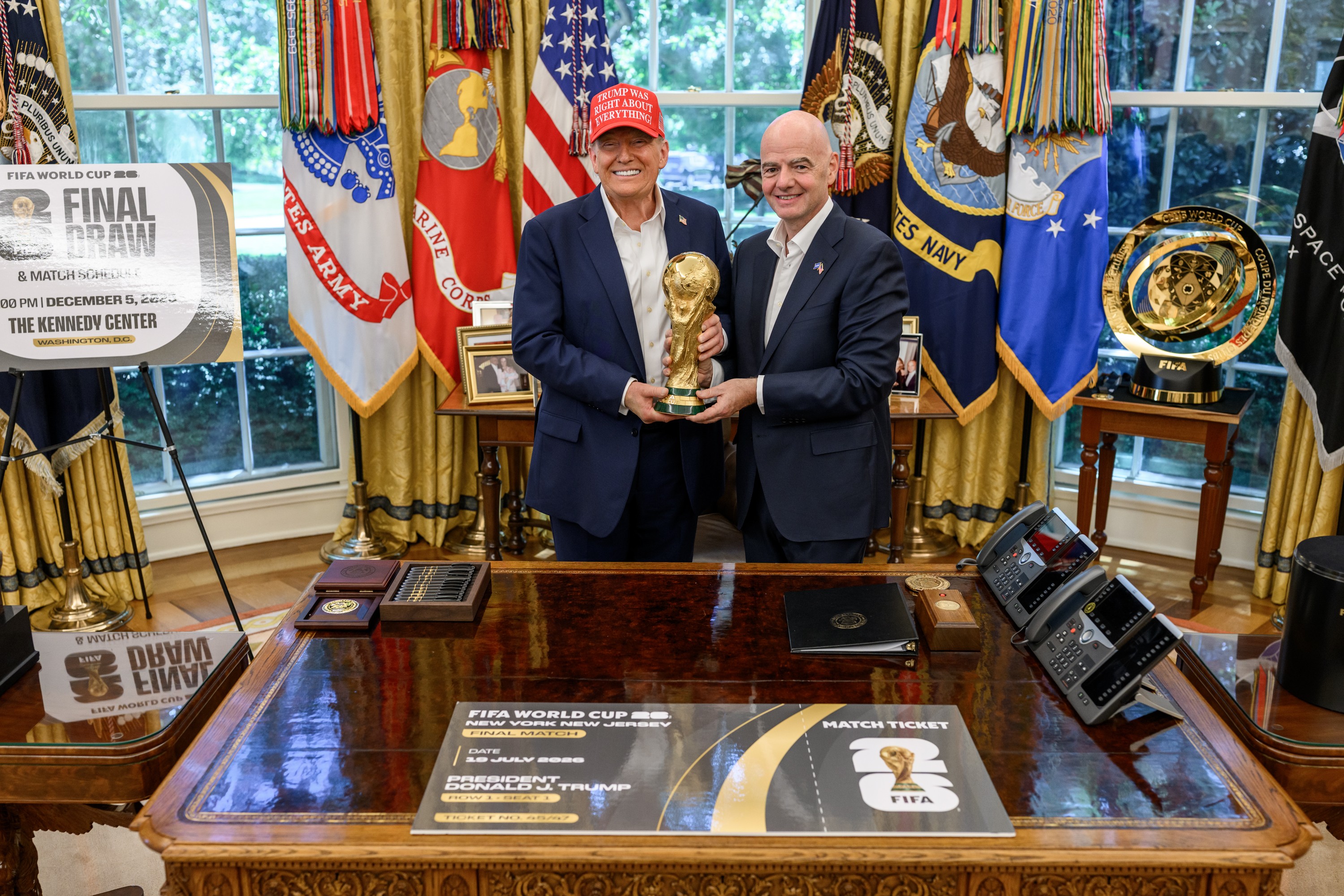
White House Press Secretary Karoline Leavitt announced on Thursday that U.S. President Donald Trump will attend the 2026 World Cup final between Spain and Argentina this Sunday. Leavitt stated that Trump's presence would be the "final touch" on what she described as the most-watched, safest, and most successful World Cup in U.S. history. This confirmation follows earlier indications from FIFA President Gianni Infantino in late June that Trump would participate in the tournament's closing ceremony and jointly present the trophy to the winning team. Trump had not attended the opening match between the U.S. and Paraguay in Los Angeles, leading to speculation that he might be concerned about potential booing, similar to an incident at an NBA final. Despite football not being a dominant sport in the U.S., presidential attendance at such events is not uncommon. The article also highlights a past controversy involving Trump and FIFA President Infantino, where Trump allegedly asked Infantino to overturn a red card issued to an American player. FIFA reportedly rescinded the decision, allowing the player to participate in a subsequent match. This intervention drew criticism from the European Union and UEFA, who argued that sports decisions should remain within the purview of sporting bodies, not politicians, and warned against the politicization of sports.
The White House's confirmation of President Trump's attendance at the 2026 World Cup final, framed by the press secretary as a capstone event, underscores the intersection of major sporting spectacles and political visibility. While the announcement emphasizes the tournament's success, it also implicitly acknowledges the strategic value of associating with globally popular events. The prior speculation regarding potential public reception at the event, contrasted with the reported FIFA intervention in a match decision, raises questions about the boundaries between political influence and sports governance. Future sporting organizations may face increasing pressure to navigate such dynamics, balancing the desire for political engagement with the imperative of maintaining autonomy and integrity in athletic competitions, particularly as global platforms become more intertwined with national interests and political narratives.
AI-generated to prompt reflection — not editorial opinion, not advice, not a statement of fact. How this works.