White House Signals Trump Support for Russian Sanctions Bill
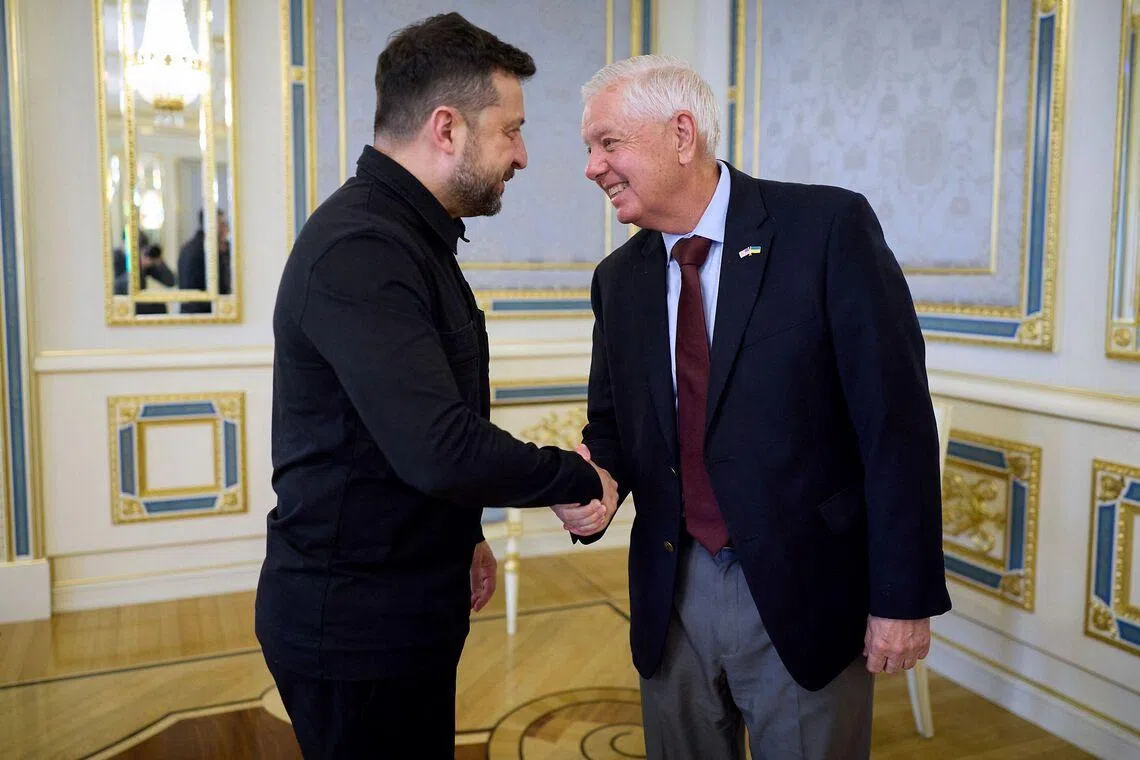
The White House has indicated that former President Donald Trump intends to support a bill proposed by Senator Lindsey Graham that would impose sanctions on Russia. This legislative effort aims to increase pressure on the Kremlin to cease its military actions in Ukraine. The proposed sanctions are designed to target key sectors of the Russian economy and individuals associated with the government. The bill's passage would represent a significant bipartisan move to hold Russia accountable for its ongoing conflict. The administration believes that such measures are crucial for deterring further aggression and promoting a peaceful resolution. This development signals a potential hardening of U.S. policy towards Russia, regardless of political affiliations. The specifics of the sanctions and their potential impact on global markets are still under discussion. The White House stated that the bill aligns with efforts to support Ukraine's sovereignty and territorial integrity. Further details regarding the bill's introduction and legislative timeline are expected.
The potential backing of Senator Graham's Russia sanctions bill by former President Trump suggests a strategic alignment on foreign policy objectives, specifically concerning the conflict in Ukraine. This bipartisan support, if realized, could amplify economic leverage against the Kremlin, potentially influencing its decision-making calculus. From a systemic perspective, such measures highlight the ongoing challenge of balancing geopolitical stability with economic interdependence. The long-term effectiveness of sanctions often depends on sustained international cooperation and the ability to adapt to evolving global market dynamics. As the world navigates an increasingly complex geopolitical landscape, policy decisions like these will be scrutinized for their capacity to foster lasting peace without unintended economic consequences.
AI-generated to prompt reflection — not editorial opinion, not advice, not a statement of fact. How this works.