White House Summons New York Times Journalists Over Air Force One Safety Report
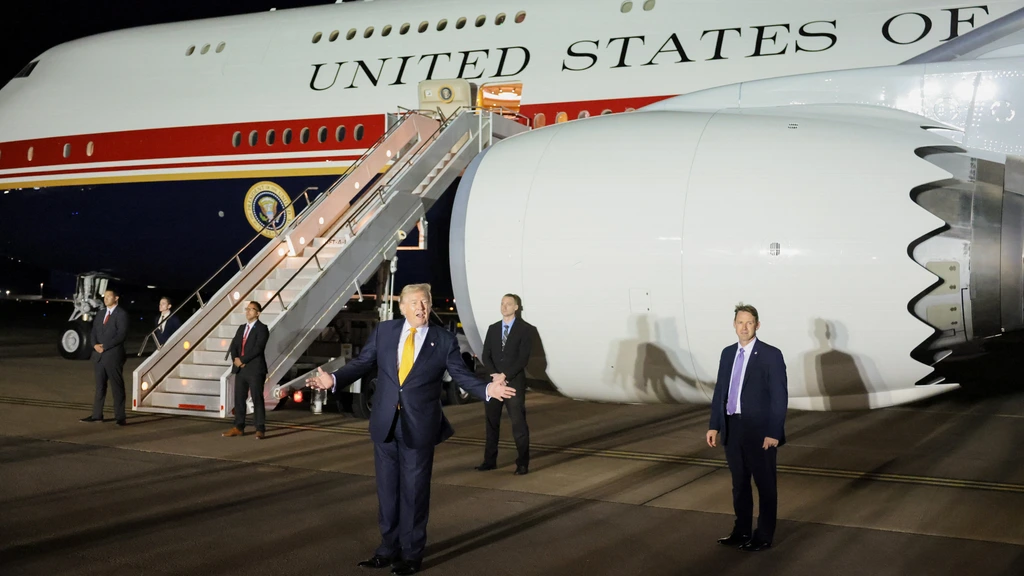
The White House has summoned four journalists from The New York Times following their report on alleged security deficiencies in President Trump's new Air Force One aircraft. The newspaper reported that the new plane, a gift from Qatar, lacks adequate safety systems compared to the older, decades-old Air Force One planes. These older aircraft are equipped with advanced features such as missile defense and anti-espionage technology, which are reportedly absent or insufficient in the new model. The New York Times article highlighted this as a potential risk, particularly for international travel. President Trump had reportedly pushed for the new aircraft to be made operational quickly after its donation, a process that took approximately one year. Former Secretary of the U.S. Air Force, Frank Kendall, expressed concern, stating that the rapid deployment might not have allowed for all necessary security modifications. Kendall found it surprising the new plane was being used abroad, especially given the geopolitical climate with Iran, suggesting it could endanger the president and other passengers. The four journalists, Julian E. Barnes, Eric Lipton, Tyler Pager, and Eric Schmitt, are expected to appear in court on Wednesday. The New York Times has condemned the summonses as an "extraordinary escalation" of President Trump's efforts to intimidate independent news organizations. Federal agents reportedly delivered the summonses to some journalists' homes, a move the newspaper's lawyer called "shocking" to anyone who believes in the U.S. Constitution and press freedom. The newspaper's attorney emphasized the public's right to know about government operations and the use of taxpayer money, which the article addressed. The Department of Justice stated the investigation targets information leakers, not the journalists themselves.
The White House's legal action against New York Times journalists over an article detailing Air Force One's security vulnerabilities raises critical questions about governmental transparency and the role of the press in a democratic society. While the government asserts its investigation targets information leakers, the summons of reporters, particularly through home visits by federal agents, can be interpreted as an attempt to chill investigative journalism. This action occurs within a broader context of evolving information security challenges and the increasing reliance on advanced technology for critical infrastructure, including presidential transport. The situation highlights a potential tension between national security imperatives, which often necessitate secrecy, and the public's right to information regarding the safety and efficacy of government assets, especially those acquired through potentially sensitive means like foreign donations. Future administrations will likely grapple with balancing these competing interests, navigating the legal frameworks protecting both classified information and press freedom in an era of heightened geopolitical awareness and technological advancement.
AI-generated to prompt reflection — not editorial opinion, not advice, not a statement of fact. How this works.