Why Anna Hazare and Sonam Wangchuk's Protests Differ
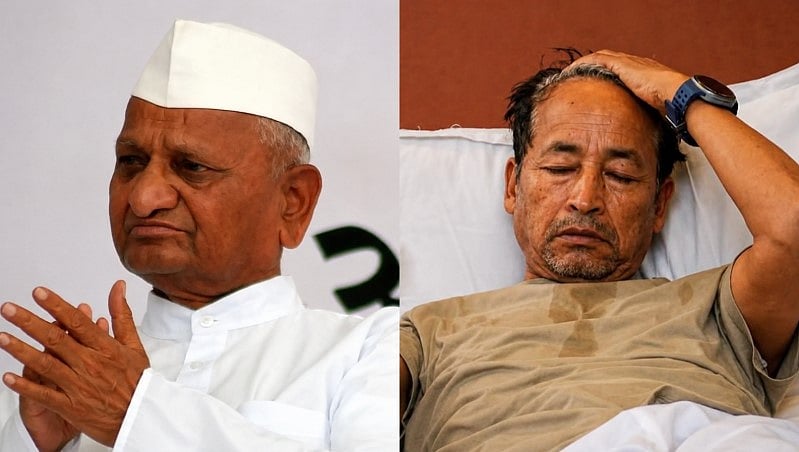
The protests led by social activist Anna Hazare and innovator Sonam Wangchuk share similarities in their non-violent approach but differ significantly in their political landscape and potential outcomes. Wangchuk's current movement has garnered minimal support from opposition parties, unlike Hazare's past protests. During Anna Hazare's demonstrations, opposition parties effectively utilized the movement to pressure the government. However, the current political climate sees opposition parties fragmented and lacking a cohesive strategy. Consequently, no single political party stands to gain directly from Wangchuk's success. In contrast, the Bharatiya Janata Party (BJP) directly benefited from Anna Hazare's movement, with the party leveraging it as a primary opposition force to its advantage.
The divergent political support for Anna Hazare and Sonam Wangchuk's respective movements highlights the evolving dynamics of civil society engagement with political structures. Hazare's protests were strategically leveraged by the BJP, which was then a principal opposition party, to exert political pressure and potentially gain electoral advantage. In contrast, Wangchuk's movement appears to lack this clear political alignment, with fragmented opposition parties unable to coalesce around his cause. This suggests that the effectiveness of such movements may be contingent not only on public mobilization but also on the prevailing political alignments and the strategic capacity of opposition forces to capitalize on them. Future movements may need to navigate complex political landscapes, considering whether direct political patronage is beneficial or detrimental to their long-term objectives in an era of shifting political alliances and information ecosystems.
AI-generated to prompt reflection — not editorial opinion, not advice, not a statement of fact. How this works.