Why Did Flash Floods Hit Muong Than Valley?
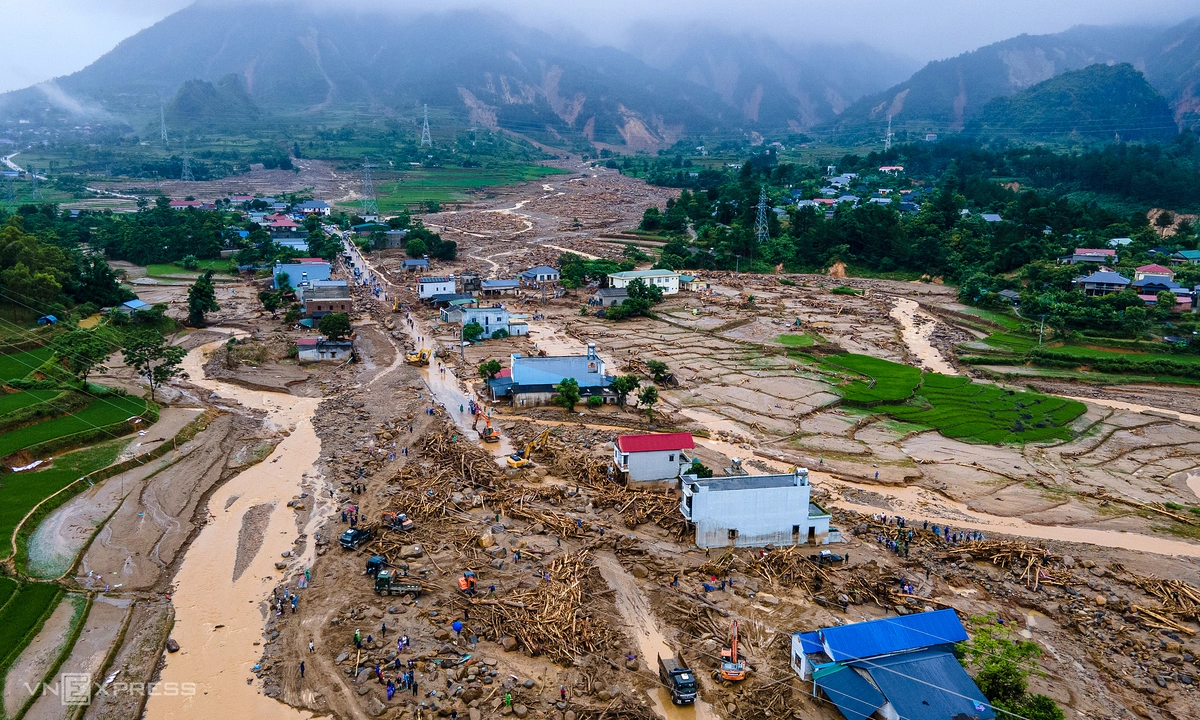
Heavy rainfall combined with steep terrain and heavily weathered geology caused landslides and debris flows from the mountainside into Muong Than Valley. This resulted in flash floods inundating the area. The natural conditions of the valley, including its topography and the state of the soil and rock, were significant contributing factors to the disaster. The intense and continuous rain overwhelmed the landscape's capacity to absorb or retain the water and debris. Consequently, a massive amount of earth, rocks, and vegetation was dislodged and swept down the slopes. This material formed a destructive torrent that flowed into the valley, leading to the flash flood event. The specific geological composition and the steep gradients of the surrounding mountains created a precarious environment susceptible to such rapid and forceful water and sediment movement.
The flash flood event in Muong Than Valley appears to be a consequence of natural environmental factors, specifically intense rainfall interacting with steep topography and geologically unstable slopes. This highlights the critical need for robust natural disaster preparedness and land-use planning in regions prone to such phenomena. Understanding the interplay between meteorological events and geological vulnerability is essential for developing effective early warning systems and mitigation strategies. Future planning should consider the long-term impacts of climate change on rainfall patterns and the potential for increased geological instability, guiding development away from high-risk zones and promoting resilient infrastructure.
AI-generated to prompt reflection — not editorial opinion, not advice, not a statement of fact. How this works.