Why Do Construction Workers Place Plastic Bottles Inside Pillars?
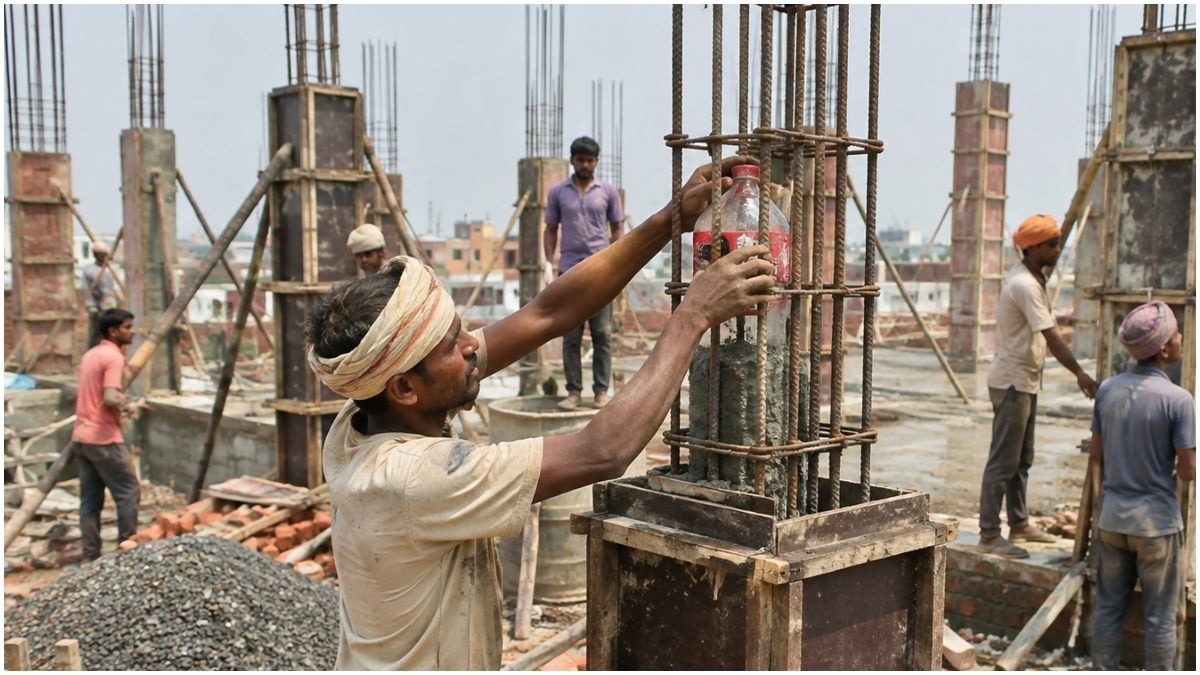
Many construction workers are reportedly placing plastic bottles inside concrete pillars during the building process. This practice, while seemingly unusual, serves a specific structural purpose. The bottles are inserted into the cement mixture before it hardens.
The primary reason cited for this method is to reduce the amount of cement and concrete required. By filling a portion of the pillar's volume with plastic bottles, workers can decrease the overall material cost of construction. The bottles act as a filler material, displacing the heavier and more expensive concrete. This technique is believed to be employed to make construction more economical, particularly in projects where cost savings are a significant consideration. However, the long-term structural integrity and environmental impact of this practice are not detailed in the provided information.
The practice of incorporating plastic bottles into concrete pillars highlights a common tension in construction between cost efficiency and material integrity. While using plastic bottles as filler can reduce material expenses, it raises questions about the long-term durability and load-bearing capacity of such structures. This method may reflect market pressures to lower construction costs, potentially at the expense of robust engineering standards. Future building codes and material science research may need to address such alternative filler materials to ensure safety and sustainability, especially as the construction industry grapples with resource scarcity and environmental concerns. Evaluating the lifecycle impact and adherence to structural regulations for these cost-saving measures will be crucial.
AI-generated to prompt reflection — not editorial opinion, not advice, not a statement of fact. How this works.
