Why Earthquakes Strike Japan and How Much Richter Scale Force Structures Can Withstand
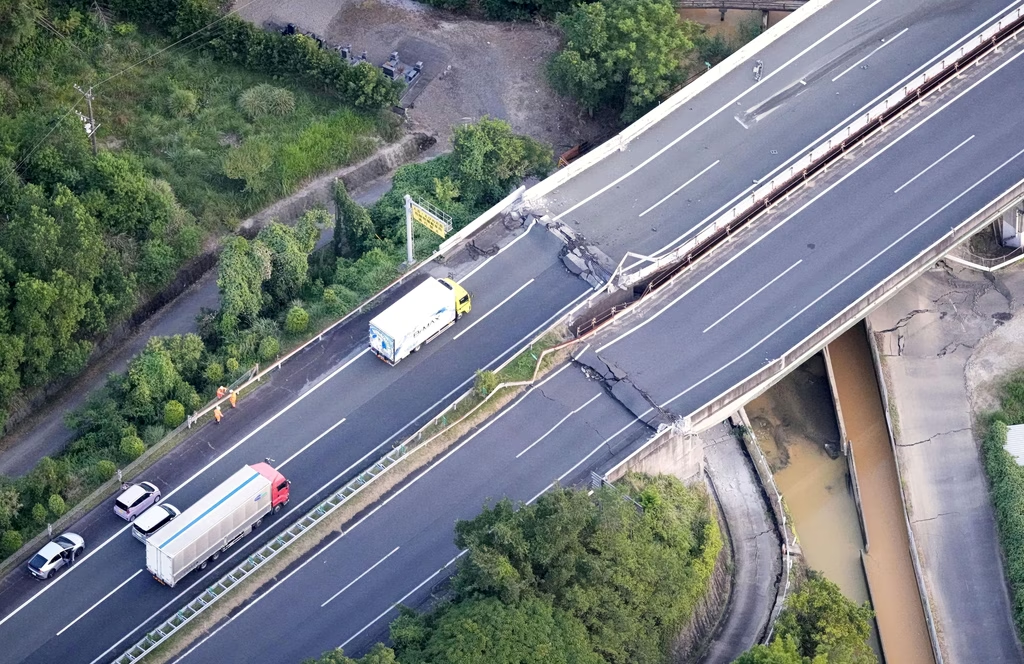
A powerful earthquake that recently struck southern Japan has highlighted a reality well-known to its people: they live in one of the planet's most geologically hazardous regions. Despite Japan's impressive seismic technology, the world's strictest building standards, and advanced early warning systems, nature continues to pose a significant threat. The country is situated on the Pacific Ring of Fire, an area known for frequent seismic activity and volcanic eruptions due to the movement of tectonic plates. This geological setting makes Japan particularly vulnerable to earthquakes. The source material implies a discussion about the limits of human construction in the face of such powerful natural events, questioning the maximum Richter scale magnitude that a man-made structure can endure. The ongoing seismic events underscore the constant challenge of balancing technological advancement with the unpredictable forces of nature.
Japan's location on the Pacific Ring of Fire presents a persistent challenge, necessitating continuous innovation in seismic resilience. While advanced engineering and stringent building codes mitigate risks, the inherent power of tectonic plate movement means that even the most robust structures face ultimate limits. Future developments will likely focus on adaptive infrastructure and potentially rethinking urban density in high-risk zones. Understanding the interplay between geological certainty and engineered solutions is crucial for long-term societal safety and sustainability in such environments.
AI-generated to prompt reflection — not editorial opinion, not advice, not a statement of fact. How this works.