Why English referees won't officiate Argentina matches in World Cup 2026
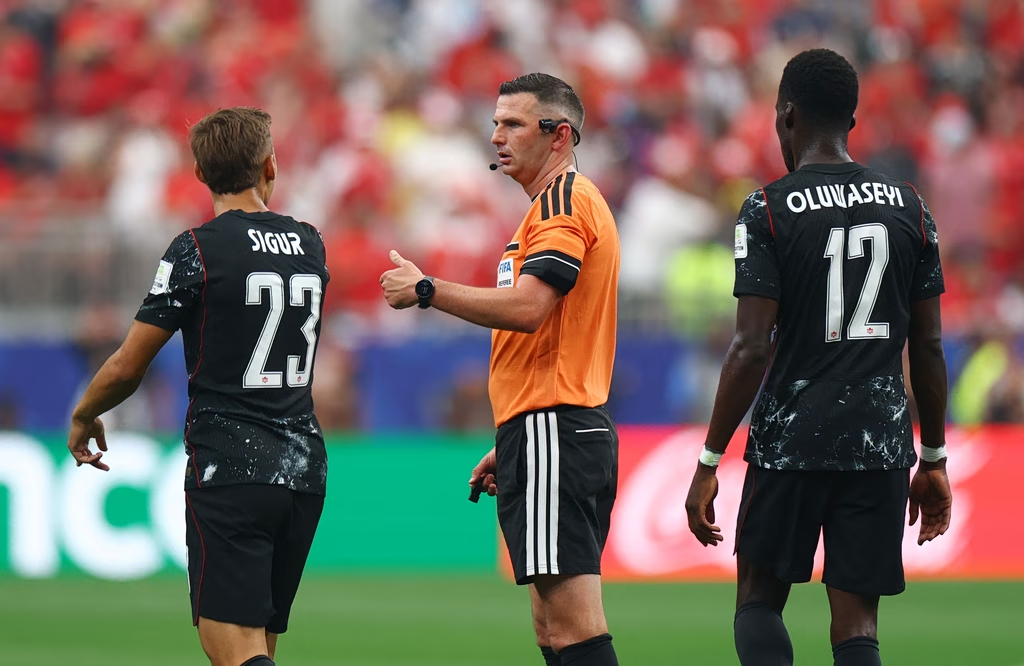
FIFA has announced the referees for the quarter-final stage of the 2026 World Cup. English referee Michael Oliver has been assigned to the significant match between Spain and Belgium. This will be Oliver's seventh World Cup match, marking a historic milestone for him. The article implies a policy or precedent preventing English referees from officiating matches involving Argentina in the tournament. While the provided text does not elaborate on the specific reasons for this exclusion, it highlights Oliver's prominent role in other high-profile games. The focus remains on the assignments for the upcoming quarter-finals, with Oliver's appointment being a notable detail. The absence of further explanation regarding the Argentina-England refereeing restriction leaves the underlying cause unaddressed in this excerpt. The broader context of referee assignments for the 2026 World Cup continues, with other officials also being designated for various matches.
The FIFA World Cup's refereeing assignments often involve complex considerations to ensure perceived fairness and neutrality, particularly in matches involving teams with historical rivalries or significant geopolitical contexts. The exclusion of referees from a specific nation, such as England, from officiating matches of another nation, like Argentina, suggests a protocol designed to mitigate potential bias, whether actual or perceived. This practice aims to uphold the integrity of the competition by minimizing any appearance of favoritism or conflict of interest. Such protocols, while intended to safeguard impartiality, can also be subject to scrutiny regarding their consistency and the specific criteria used for exclusion. The underlying incentive for such rules is to maintain public trust in the officiating, especially in high-stakes matches where national pride is deeply invested. Future iterations of tournament officiating might explore more dynamic systems that balance neutrality with a broader pool of qualified referees, potentially leveraging advanced analytics to ensure fairness without national restrictions.
AI-generated to prompt reflection — not editorial opinion, not advice, not a statement of fact. How this works.