Why Europe Needs Pakistan in a Shifting Geopolitical Landscape
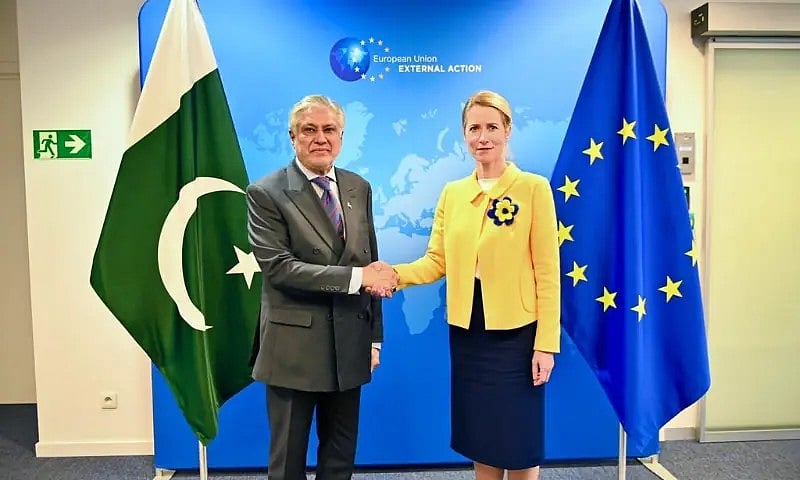
Europe's strategic environment is undergoing rapid transformation, compelling the European Union (EU) to re-evaluate its foreign partnerships. Key drivers of this shift include the ongoing war in Ukraine initiated by Russia, widespread instability across the Middle East, and escalating security concerns in the Red Sea. These factors have also raised new anxieties regarding the stability of global supply chains. Consequently, the EU is compelled to reassess its alliances and collaborations with international partners. The evolving geopolitical dynamics necessitate a strategic reorientation for Europe as it navigates these complex challenges. This reevaluation aims to ensure greater security and stability in a world facing unprecedented disruptions. The EU's foreign policy is thus adapting to address these pressing issues and secure its interests.
The EU's strategic reassessment, prompted by conflicts in Ukraine and the Middle East, alongside Red Sea security issues, highlights a global pivot towards regionalization and supply chain resilience. As traditional alliances face strain, the EU is likely seeking to diversify its partnerships to mitigate risks and secure critical trade routes. This recalibration reflects a broader trend of nations prioritizing pragmatic alliances based on shared interests in stability and economic security, rather than solely ideological alignment. The coming decade will likely see further fragmentation and the emergence of new geopolitical blocs, making such adaptive foreign policy crucial for European economic and security interests.
AI-generated to prompt reflection — not editorial opinion, not advice, not a statement of fact. How this works.