Why is the Saudi Crown Prince Turning Away from Washington?
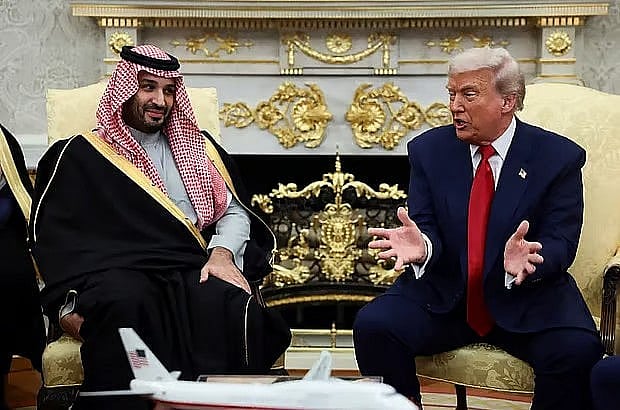
The article explores the reasons behind Saudi Crown Prince Mohammed bin Salman's apparent shift away from traditional alignment with Washington. This strategic recalibration is influenced by several evolving geopolitical and economic factors. The Crown Prince is seeking to diversify Saudi Arabia's international partnerships and reduce its reliance on any single global power. This move is partly driven by a desire to secure the Kingdom's long-term interests in a rapidly changing world order.
Furthermore, the Crown Prince is prioritizing economic diversification under Saudi Vision 2030, which requires a stable and predictable international environment. This vision necessitates fostering relationships with a broader range of countries and international bodies. The shift also reflects a growing assertiveness in Saudi foreign policy, aiming to carve out a more independent role on the global stage. The Crown Prince's actions suggest a proactive approach to managing Saudi Arabia's future, balancing national interests with global dynamics.
The Saudi Crown Prince's strategic recalibration away from Washington reflects a broader trend of shifting global power dynamics and a desire for greater national autonomy. As emerging economies gain influence and traditional alliances are re-evaluated, nations are increasingly seeking to diversify their partnerships to mitigate risks and maximize opportunities. This move can be viewed through the lens of geopolitical hedging, where Saudi Arabia aims to secure its interests by not being overly dependent on any single superpower. The focus on economic diversification under Vision 2030 further incentivizes this approach, as new economic models often require a more complex and multifaceted international engagement. The long-term implications may involve a more multipolar world order where regional powers play a more significant role in shaping global affairs, potentially leading to both increased stability through broader cooperation and new challenges arising from competing interests.
AI-generated to prompt reflection — not editorial opinion, not advice, not a statement of fact. How this works.