Why ISRO's Expertise is Consistently Sought for India's Education Reforms
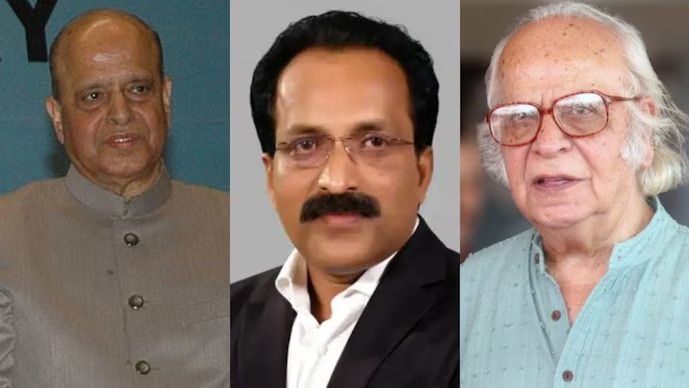
Amidst controversies surrounding the NEET exam, paper leaks, and significant turmoil within the National Testing Agency (NTA), the Indian central government has established a new high-level task force focused on examination security. Notably, former ISRO Chairman S. Somanath has once again been assigned a significant role within this committee. This recurring involvement raises the question of why space scientists are repeatedly called upon when the nation's education system faces instability. This situation highlights a pattern observed over the past 33 years, suggesting a consistent reliance on ISRO's expertise for addressing critical challenges within the educational framework. The government's decision to include Somanath again indicates a continued trust in his capabilities and potentially the broader organizational strengths of ISRO to contribute to solutions for complex issues in education administration and security. The article aims to explore the reasons behind this enduring connection between ISRO and educational reforms in India.
The recurring appointment of ISRO personnel, particularly former chairmen like S. Somanath, to lead high-level task forces on examination security and education reform suggests a systemic search for robust, process-driven solutions. This approach may stem from ISRO's established reputation for precision, complex project management, and technological integration. The government's reliance on this external expertise, rather than solely internal educational bodies, could indicate perceived gaps in current institutional capacity or a desire for an unbiased, technologically adept perspective. This pattern prompts reflection on how principles of systems engineering and rigorous quality control, honed in the space sector, might be transferable to improve the integrity and efficiency of large-scale public examinations. The long-term implications involve evaluating whether this reliance fosters sustainable internal improvements within educational agencies or perpetuates a dependency on external problem-solvers.
AI-generated to prompt reflection — not editorial opinion, not advice, not a statement of fact. How this works.