Why Legs Feel Weak After Swimming in Aquathlon
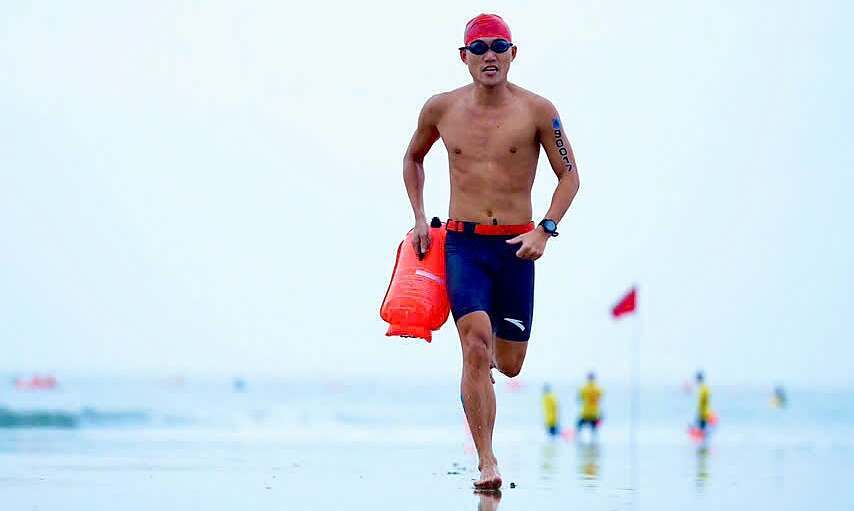
Many triathletes and aquathletes experience a sensation of weak or jelly-like legs immediately after completing the swimming portion of a competition. This phenomenon, often described as 'jelly legs' or 'heavy legs,' presents a significant challenge during the transition phase from water to land. The transition requires athletes to quickly dismount, change gear if necessary, and begin the running segment, all while their leg muscles are still recovering from the sustained effort of swimming. This sudden shift in biomechanics and muscle engagement can lead to a temporary loss of power and coordination in the legs. Athletes must consciously work to regain stability and propulsion for the run. Understanding and training for this specific transition is crucial for optimizing performance in aquathlon and related multi-sport events. Proper conditioning can help mitigate the effects and improve race times.
The physiological response of 'jelly legs' after swimming in aquathlon highlights a common challenge in multi-sport events: the transition between vastly different disciplines. Swimming engages leg muscles isometrically and with lower impact, while running demands explosive, weight-bearing power. The sudden shift in demand can lead to temporary neuromuscular fatigue and altered blood flow distribution. Future training methodologies might focus on more integrated transition drills, simulating the rapid switch in muscle recruitment and proprioception. Understanding these biomechanical and physiological trade-offs is key for athletes seeking to optimize performance and minimize time lost during transitions, demonstrating a broader principle of adapting to rapid environmental and physical state changes in high-performance scenarios.
AI-generated to prompt reflection — not editorial opinion, not advice, not a statement of fact. How this works.