Why Norwegian Names Like Haaland Sound Strange to Brazilians
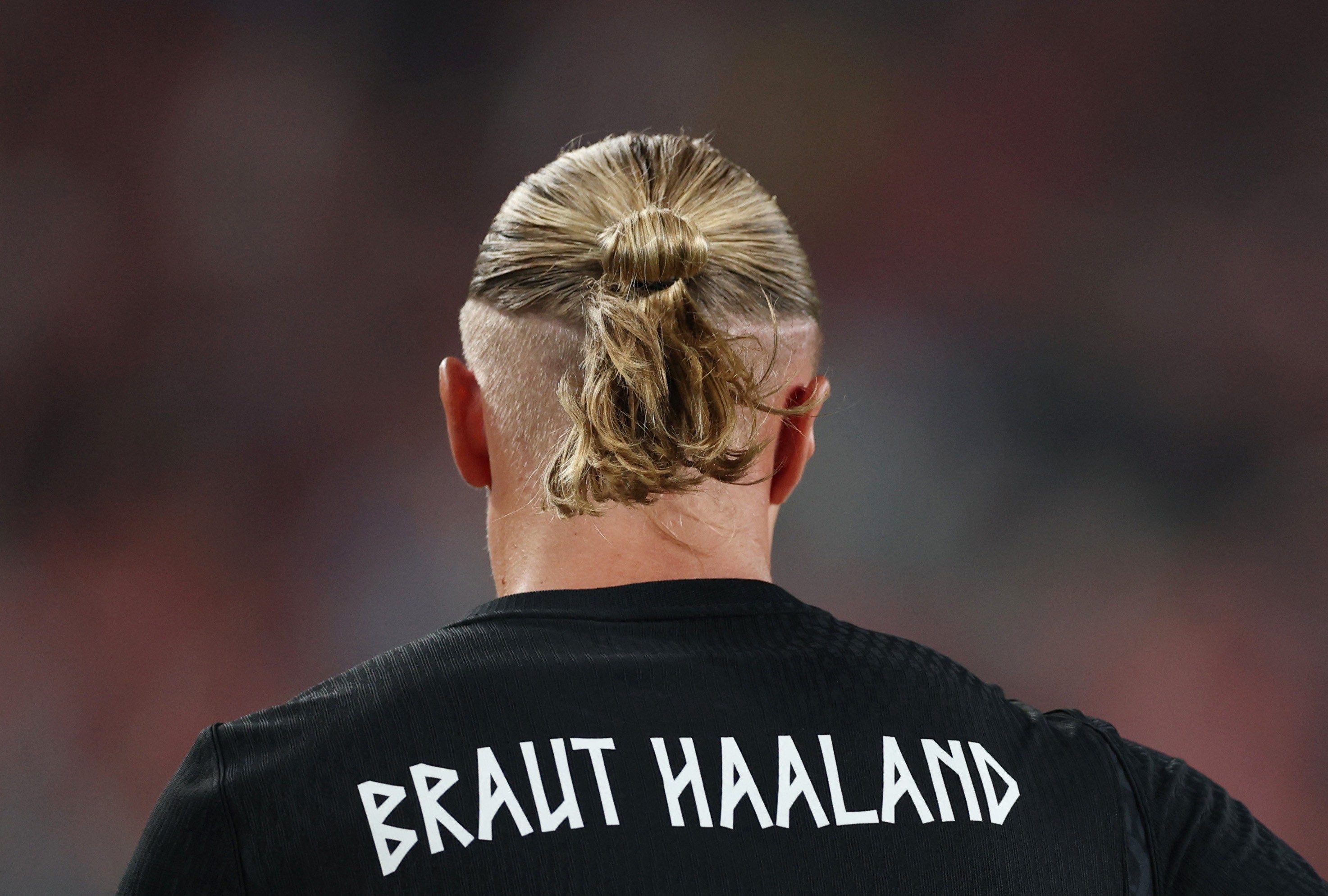
As Brazil prepares to face Norway in the World Cup, the unique sounds of Norwegian names like Erling Haaland and Leo Østigård are causing confusion among Brazilian Portuguese speakers. The difficulty stems from the distinct linguistic origins of Norwegian, a Germanic language descended from Old Norse, compared to Portuguese, a Romance language derived from Latin. This fundamental difference impacts pronunciation and spelling conventions, making many Norwegian names appear unfamiliar, almost as if from Viking lore. Some names, like Kristoffer Ajer and Erling Haaland, are relatively straightforward, while others, such as Rædergård Schjelderup and Leo Østigård, present greater challenges due to the Norwegian alphabet's additional letters: Æ, Ø, and Å. The complexity is further amplified by Norway's numerous dialects and two official written forms, Bokmål and Nynorsk, which can lead to variations in pronunciation even among native speakers. A 10-year-old Brazilian boy named Luiz Crepaldi, who has lived in Norway for six years and is fluent in the language, has gone viral on social media for demonstrating these pronunciation differences. He and his mother, Pâmela Crepaldi, created a video comparing the Norwegian pronunciations with their Brazilian counterparts. The video, which has garnered over half a million views, aims to clarify how Norwegian names are spoken, addressing common Brazilian curiosities. Luiz offers tips, suggesting a pronunciation akin to having 'an egg in your mouth,' and specifically explains that the 'AA' in Haaland sounds like 'Å,' similar to an 'O,' and the final 'D' is nearly silent, resulting in a pronunciation closer to 'Rô-lan.'
The linguistic divergence between Portuguese and Norwegian, highlighted by the pronunciation of player names, illustrates how language evolution and cultural contact shape phonetic and orthographic systems. The presence of unique characters like Æ, Ø, and Å in Norwegian reflects its Germanic roots and distinct historical development, contrasting with the Latin-based Portuguese. This phenomenon underscores the importance of linguistic diversity and the challenges of cross-cultural communication, particularly in global events like the World Cup. The viral success of Luiz Crepaldi's video demonstrates a public interest in understanding these differences, suggesting an opportunity for educational content that bridges linguistic divides and fosters greater appreciation for global languages and cultures. From a systems perspective, the interaction between official written forms (Bokmål, Nynorsk) and regional dialects in Norway further complicates standardization and learning, a common challenge in many nations with rich linguistic heritage.
AI-generated to prompt reflection — not editorial opinion, not advice, not a statement of fact. How this works.