Why Pickles Glow When Plugged Into Electricity
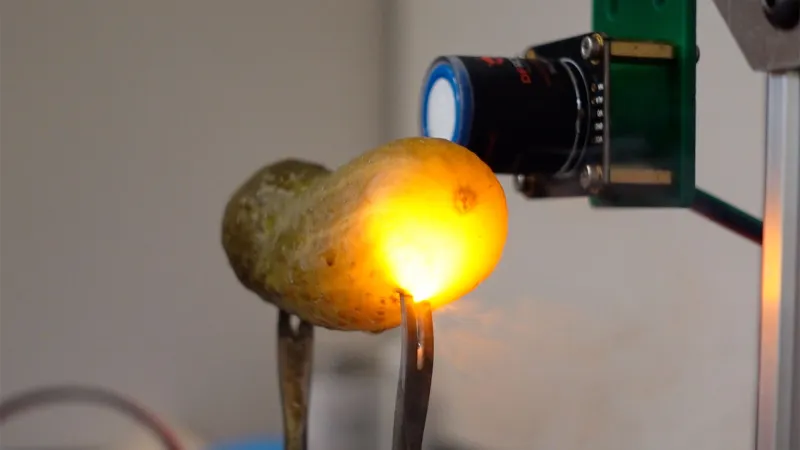
A peculiar phenomenon has captured attention: pickles emitting a glow when connected to a power source. This intriguing effect is rooted in fundamental physics, transforming a common food item into a demonstration of scientific principles. The event involves a scientist, a jar of pickles, and a power strip, culminating in a visually striking display. Essentially, the process leverages electrical conductivity to produce light. This party trick serves as an accessible illustration of how electricity interacts with certain materials. The science behind the glow is explained by the physics principles at play. It highlights an unexpected application of electrical science using everyday objects. The demonstration offers a novel way to engage with scientific concepts.
This demonstration highlights the often-surprising electrical properties of common materials. By observing the glow, one can infer the ionic conductivity of the brine solution within the pickle, which allows it to conduct electricity and complete a circuit. This phenomenon is a tangible example of how basic physics principles can manifest in everyday contexts, potentially sparking interest in electrochemistry and material science. Understanding such interactions can inform future applications in areas like sensor technology or even novel lighting solutions, demonstrating how fundamental scientific inquiry can lead to unexpected insights.
AI-generated to prompt reflection — not editorial opinion, not advice, not a statement of fact. How this works.