Why Scientists Are Studying Roundworm Feces
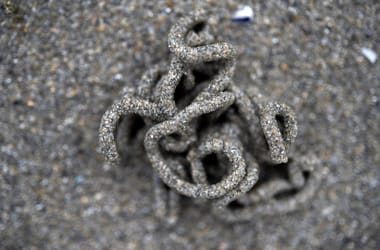
Three scientists are investigating the feces of roundworms, exploring the biological and physical properties of this material. Their research extends beyond just the waste products, as they have also experimented with honey. For instance, they have calculated why honey drizzled onto bread spreads in a looped pattern. This interdisciplinary approach suggests a broader scientific curiosity into natural phenomena and materials, applying quantitative methods to understand everyday occurrences and biological processes. The specific reasons for focusing on roundworm feces are not detailed, but the inclusion of honey experiments indicates a diverse research scope. The scientists aim to unravel the underlying principles governing these observations.
This research into roundworm excrement and honey's behavior on bread, while seemingly disparate, highlights a scientific drive to understand fundamental material properties and biological functions. By quantifying phenomena like honey's spreading patterns, researchers can build predictive models applicable to fields ranging from food science to biomaterials. The focus on biological waste products may offer insights into ecological processes or novel applications for waste valorization. The scientific method applied here, involving observation, hypothesis, and quantitative analysis, is crucial for advancing knowledge and developing innovative solutions, particularly as we increasingly rely on understanding complex systems in the age of AI and synthetic biology.
AI-generated to prompt reflection — not editorial opinion, not advice, not a statement of fact. How this works.