Why Some Women Can See Colors Invisible to Most People
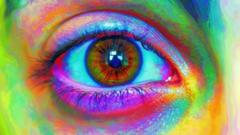
Certain women possess a rare genetic trait that allows them to perceive a wider spectrum of colors than the average person. This ability stems from the presence of a "fourth cone cell" in their eyes, a type of photoreceptor cell. While most humans have three types of cone cells, enabling them to see red, green, and blue light, these exceptional women have a fourth, which allows them to distinguish more nuanced color shades. This genetic variation means they can perceive subtle differences in color that are imperceptible to others. In some cases, this can even lead to the experience of seeing entirely new colors that fall outside the typical human visual range. This phenomenon highlights the diversity of human sensory perception and the complex genetic underpinnings of vision.
The existence of individuals with tetrachromacy, such as the women described, demonstrates the biological variability within human visual systems. While the majority of the population operates with trichromatic vision, this genetic anomaly suggests that the human capacity for color perception may be more diverse than commonly understood. From a systems perspective, this raises questions about the design of color-based technologies and interfaces, which are typically calibrated for trichromatic users. Future advancements in personalized technology could potentially cater to a wider range of human sensory capabilities, optimizing user experience across different perceptual profiles. This also underscores the ongoing evolution of human biology and its interaction with technological development.
AI-generated to prompt reflection — not editorial opinion, not advice, not a statement of fact. How this works.