Why Super Glue Sticks So Well: The Science Behind Cyanoacrylate
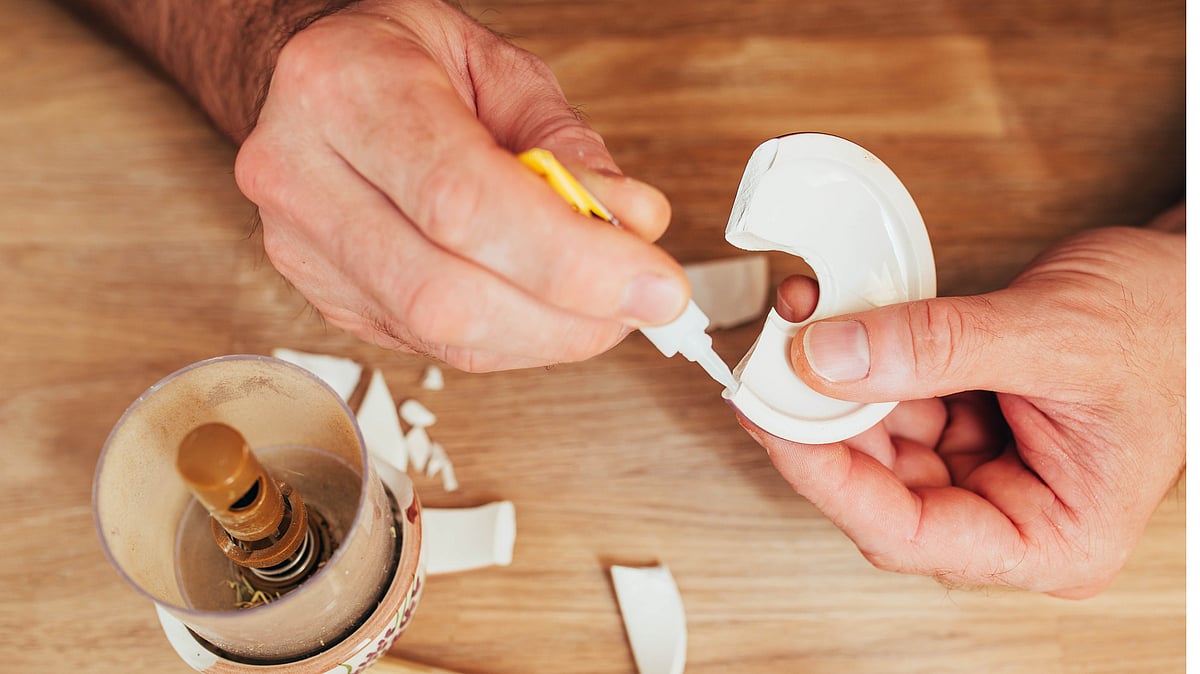
Super glue, a staple for repairing broken ceramics and teacups, owes its powerful adhesive properties to cyanoacrylate, an acrylic resin. Unlike glues like PVA, which bond through evaporation, super glue requires a small amount of moisture to initiate its bonding process. Atmospheric humidity is sufficient, as water vapor reacts with cyanoacrylate to form long polymer chains that create a strong bond between surfaces. These chains are difficult, though not impossible, to break.
Acetone, found in nail polish remover, is a potent solvent that can weaken these polymer chains, making them pliable enough to separate the glued items. Alternatively, temperature can be used to break the bond; heating the glued object above 82 degrees Celsius softens the glue, while cooling it below 1 degree Celsius makes the bond brittle and prone to separation. The strong mechanical force of the bond is due to both adhesive forces (sticking to surfaces) and cohesive forces (molecules holding together within the glue itself).
Super glue remains liquid in its tube due to the absence of moisture and the presence of an acidic stabilizer coating the container's walls. Both factors inhibit the formation of polymer chains. Once exposed to air and its humidity, the glue rapidly hardens. To prevent the tube from becoming clogged, the cap should be replaced immediately after use, as exposure to air will cause the exposed glue to form a solid mass.
This article explains the chemical and physical principles behind super glue's effectiveness. It highlights how cyanoacrylate's rapid polymerization, triggered by moisture, creates a robust bond through molecular attraction. The analysis also touches on methods to reverse this bond using solvents or temperature, illustrating the dynamic nature of chemical adhesion. Understanding these mechanisms is crucial for safe and effective use, as well as for appreciating the material science involved in everyday products. The information presented serves to demystify a common household item, promoting informed consumer behavior and potentially sparking interest in chemistry and material engineering.
AI-generated to prompt reflection — not editorial opinion, not advice, not a statement of fact. How this works.