Why Trains Use Metal Wheels While Cars Use Rubber Tires
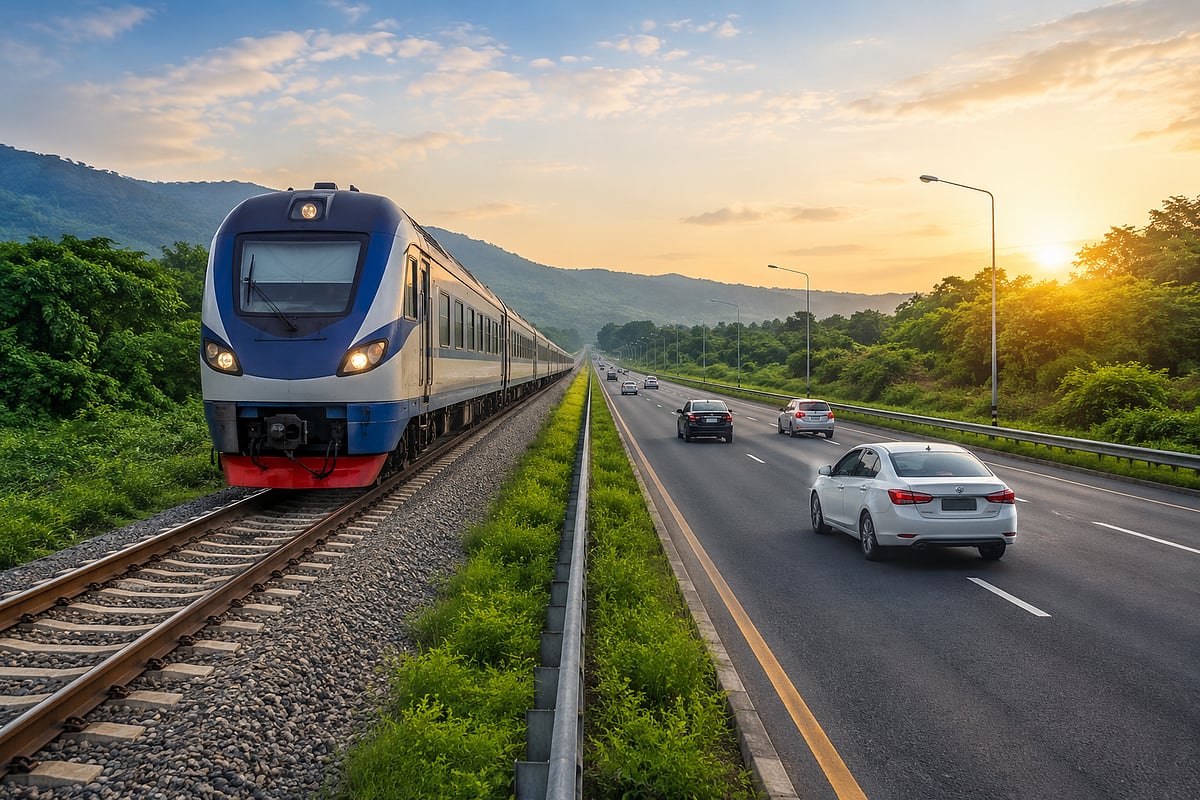
Vehicles, from cars to trains, utilize different wheel materials due to fundamental physics principles: friction, speed, and terrain. Cars rely on rubber tires for grip on varied road surfaces, including uneven and slippery conditions. This friction is crucial for safe acceleration, braking, and preventing skids. Rubber tires also absorb shocks from minor road imperfections, providing a smoother ride for passengers. In contrast, trains operate on smooth, consistent steel rails and require metal wheels to minimize friction. This allows heavy, high-speed trains to maintain momentum with less energy expenditure. High friction from rubber on metal rails would impede train movement and waste significant engine power. The design of train wheels includes a flange, an elevated rim on the inner side, which keeps the wheels on the track. While rubber-tired trains exist, such as in some subway systems in Paris, Montreal, and Mexico City, they are less common globally. These systems, despite offering quieter operation and potentially higher speeds, consume more energy and experience faster tire wear, making them less practical for widespread adoption.
The choice of wheel material for trains versus cars is a clear example of engineering optimization driven by distinct operational requirements. Trains prioritize energy efficiency and load-bearing capacity on predictable, low-friction tracks, favoring metal's durability and minimal resistance. Cars, conversely, necessitate high friction for control and safety across unpredictable, varied road surfaces, making rubber the superior choice for grip and shock absorption. The existence of rubber-tired trains highlights a trade-off: reduced noise and potential speed gains come at the cost of increased energy consumption and wear, illustrating that technological solutions are often context-dependent. Future advancements may explore novel materials or hybrid systems that could offer improved efficiency and adaptability across different transport modes, potentially mitigating the high energy costs associated with current rubber-tired train designs.
AI-generated to prompt reflection — not editorial opinion, not advice, not a statement of fact. How this works.