Wild Boars Attack Python to Save Piglet on Chittagong University Campus
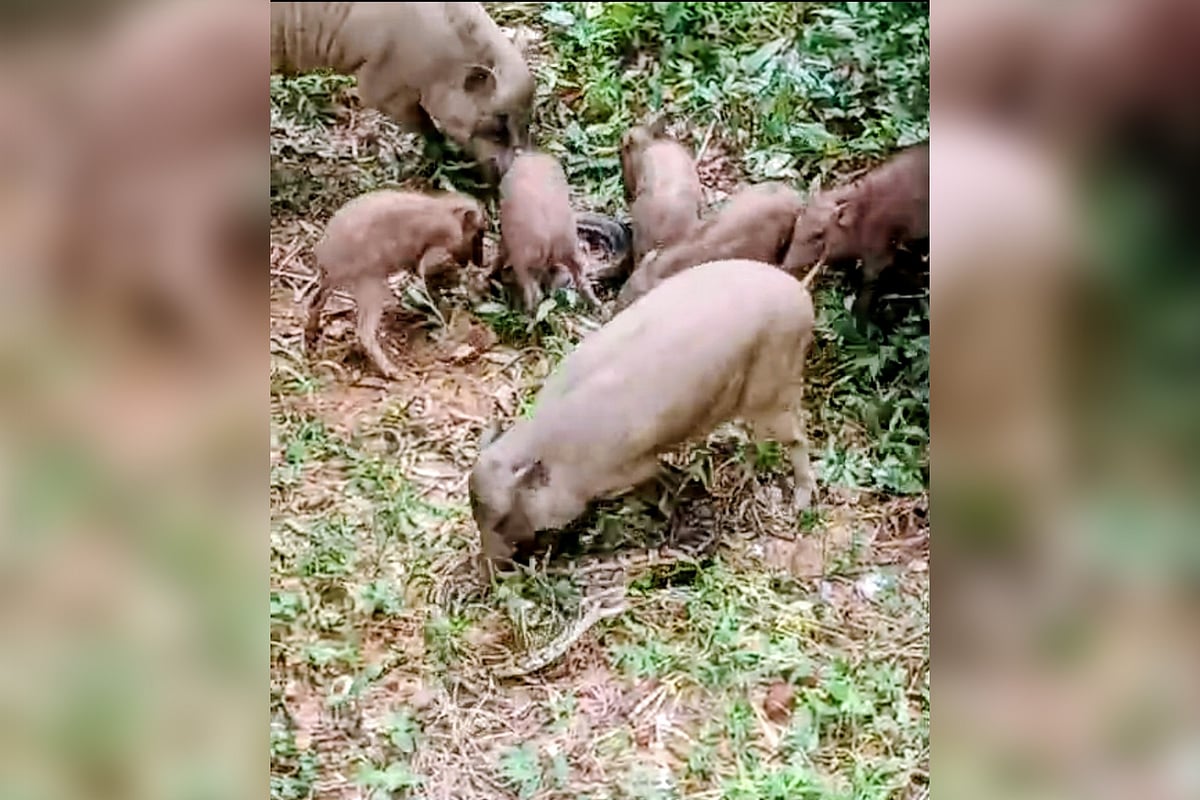
A group of wild boars, including several piglets, descended from the hills into a residential area in search of food on the southern campus of Chittagong University. A Burmese python, approximately 10 feet long and weighing 12-15 kg, attempted to prey on one of the piglets. However, the other boars noticed the attack and, in a coordinated effort, 10 to 12 members of the boar group launched an assault on the python to protect the young piglet. The incident occurred on Saturday afternoon. The python was subsequently rescued by the university's 'Society for Snake and Snake Bite Awareness' (3SA). After receiving initial treatment, the snake was released back into a deep forest area. Assistant Proctor Nurul Hamid Kanan confirmed that the python was found near his residence and that he was alerted by his household staff. He also noted that 15 to 20 wild boars frequently come down to the area for food, and this encounter likely stemmed from their search for sustenance. Mohammad Jahidul Alam, a member of the snake rescue team and a fourth-year zoology student, stated that the python was injured during the attack by the wild boars. The rescue team, with the assistance of security personnel, provided first aid before releasing the snake into the wilderness.
This event highlights the complex interspecies dynamics within local ecosystems, particularly where human habitation intersects with wildlife habitats. The boars' defensive behavior towards their young, a common instinct, demonstrates a strong social cohesion and protective strategy. The python's attempt to hunt a piglet reflects natural predation patterns driven by survival needs. The intervention by a university-affiliated rescue organization underscores the growing efforts to manage human-wildlife conflict through non-lethal means, balancing conservation with public safety. Future considerations may involve understanding the ecological factors driving these animal movements into residential areas and exploring strategies to mitigate such encounters, potentially through habitat management or public awareness campaigns, to ensure the safety of both wildlife and the human community.
AI-generated to prompt reflection — not editorial opinion, not advice, not a statement of fact. How this works.