Wildfire Smoke Chokes Eastern US, Threatening World Cup Final Preparations
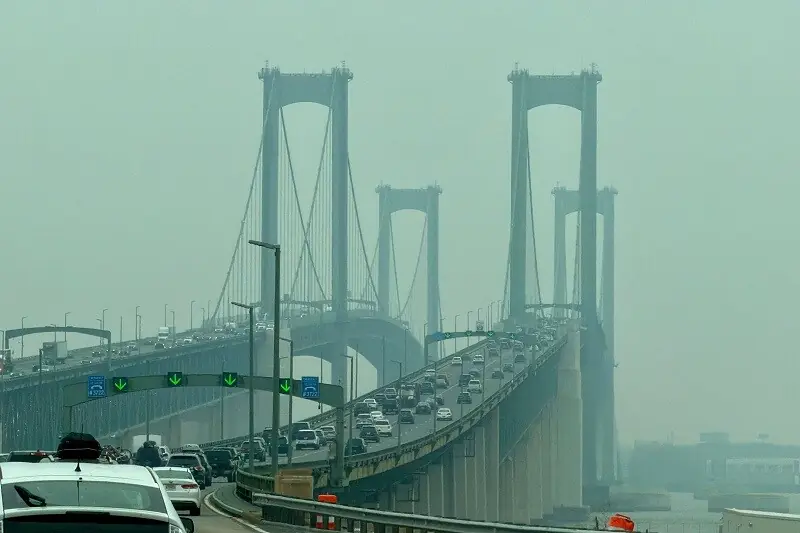
Heavy, acrid smoke from Canadian wildfires blanketed the eastern United States on Saturday, severely impacting air quality and disrupting preparations for the World Cup final. New York City, Washington, and the US Midwest experienced dangerously low air quality, with New York City briefly becoming the world's most polluted city according to IQAir. The World Cup final, scheduled for Sunday in an open stadium in New Jersey, features a match between Argentina and Spain. Tournament organizers are closely monitoring the situation, with White House World Cup task force executive director Andrew Giuliani providing updates. While thunderstorms were anticipated to bring some relief by washing away smoke, they also posed risks of flash flooding and strong winds. New York Mayor Zohran Mamdani advised residents to stay indoors and limit travel due to these weather threats. The US National Weather Service indicated that smoke would persist through Saturday afternoon. In Washington D.C., the Department of Homeland Security and Emergency Management classified air quality as "unhealthy for at-risk groups," recommending reduced outdoor activity for children and the elderly. Over 950 wildfires were active across Canada as of Saturday morning. US President Donald Trump criticized Canada's forest management, suggesting "willful negligence" and threatening tariffs, while advocates highlighted the link between such events and climate change.
The recurring severe wildfire smoke events impacting major population centers in the eastern United States highlight the interconnectedness of environmental challenges across borders. This situation underscores the systemic risks associated with climate change, which exacerbates wildfire frequency and intensity. The political response, including threats of tariffs, indicates a potential for international friction over shared environmental resources and responsibilities. Moving forward, a focus on collaborative, long-term strategies for forest management and climate change mitigation will be crucial. The event also serves as a stark reminder of the vulnerabilities of large-scale public events to environmental conditions, prompting a need for enhanced contingency planning and potentially influencing urban planning and infrastructure development in the face of evolving climate realities.
AI-generated to prompt reflection — not editorial opinion, not advice, not a statement of fact. How this works.