Wimbledon's Pigeon Patrol: A Hawk's Annual Duty
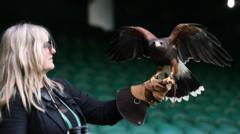
For the 18th consecutive year, Wimbledon has employed a hawk named Rufus to ensure that pigeons do not interfere with the tennis matches. Rufus's presence is a long-standing tradition at the prestigious tournament, aimed at maintaining the integrity of the games by keeping the courts clear of avian distractions. The deployment of a bird of prey is a unique and effective method to manage the pigeon population around the All England Lawn Tennis and Croquet Club. This practice highlights the tournament's commitment to providing an uninterrupted viewing and playing experience for athletes and spectators alike. Rufus, a Harris hawk, has become an iconic figure at Wimbledon, recognized for his crucial role in safeguarding the event. The strategy has proven successful over nearly two decades, demonstrating the efficacy of using natural deterrents in a high-profile sporting environment. The consistent use of Rufus underscores the ongoing challenge posed by pigeons and the established solution Wimbledon relies upon.
The use of Rufus the hawk at Wimbledon exemplifies a creative, albeit traditional, approach to pest control in a high-stakes environment. This method leverages natural predator-prey dynamics to solve a logistical problem, avoiding more intrusive or potentially harmful chemical deterrents. From a systems perspective, it highlights the need for adaptive strategies in managing urban wildlife intrusion into human-dominated spaces. Looking ahead, while effective, such methods may face evolving ethical considerations or require integration with newer technologies, such as drone-based deterrents or advanced sensor networks, to maintain optimal performance and public perception in the coming decade.
AI-generated to prompt reflection — not editorial opinion, not advice, not a statement of fact. How this works.