Witch builds 36-foot statue of Devil in Brazil, costing $20,000
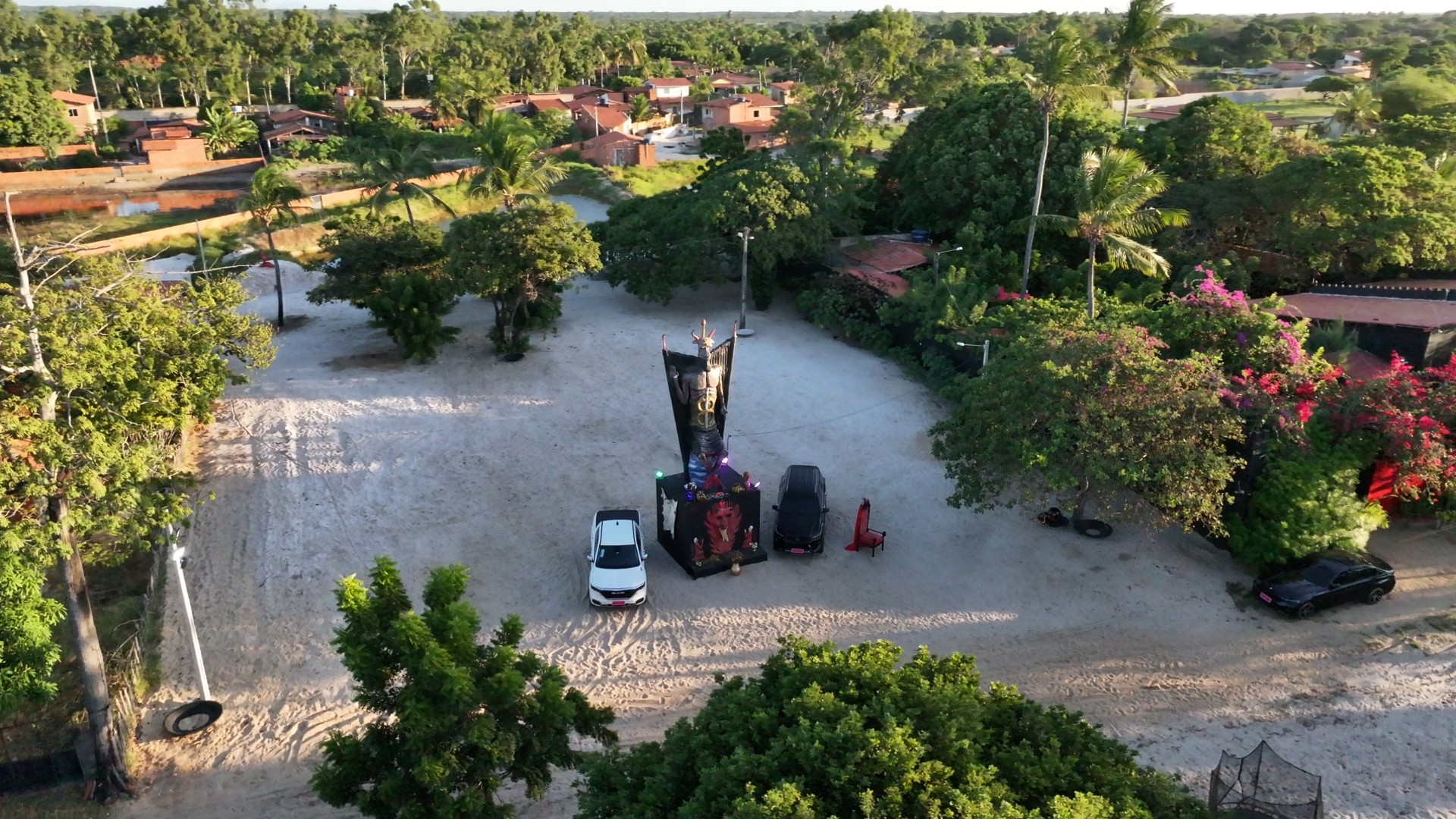
A 36-foot (11-meter) statue dedicated to the Devil has been constructed in Taíba, a district of São Gonçalo do Amarante in Brazil's Ceará state. The R$ 100,000 (approximately $20,000 USD) investment was funded entirely by Mãe Rainha das Trevas, a self-proclaimed witch and leader of a Quimbanda group. The monument is situated on her private property, which she stated was acquired with her own funds. A civil engineer designed the statue, though the construction timeline was not disclosed. Mãe Rainha das Trevas emphasized that the construction received all necessary environmental and urban planning permits from local and state authorities, including the Secretariat of Environment and Urbanism (SEMURB) and the State Secretariat of Environment and Climate Change (SEMA). The statue's inauguration coincided with the 29th anniversary of her religious center, the Palácio Estrela Negra da Quimbanda. She claims it is the world's largest Devil statue, though this is unverified. The witch, who has nearly 800,000 Instagram followers, has faced religious prejudice but advocates for religious freedom and mutual respect. Quimbanda, described as a marginalized cult focused on entities like exus and pombagiras, is not officially recognized as a religion but is seen by practitioners as a path to spiritual evolution. Mãe Rainha das Trevas also highlighted her community outreach, including annual donations of meat and toy distributions for Children's Day.
The construction of a large religious monument, regardless of the deity or entity it represents, often highlights the intersection of personal belief, private property rights, and public perception. In this instance, the significant personal investment and adherence to regulatory processes by Mãe Rainha das Trevas underscore the legal framework supporting freedom of belief and property development in Brazil. The ensuing public discussion, marked by both support and prejudice, reflects broader societal challenges in navigating diverse spiritual practices and combating religious intolerance. As societies evolve, understanding the systemic pressures that lead to the marginalization of certain spiritual traditions, and the legal and social mechanisms available to protect religious freedom, becomes increasingly critical for fostering inclusive public spaces and discourse.
AI-generated to prompt reflection — not editorial opinion, not advice, not a statement of fact. How this works.