Witness 79: Tehran women protest mandatory hijab in snowy 1979 demonstration
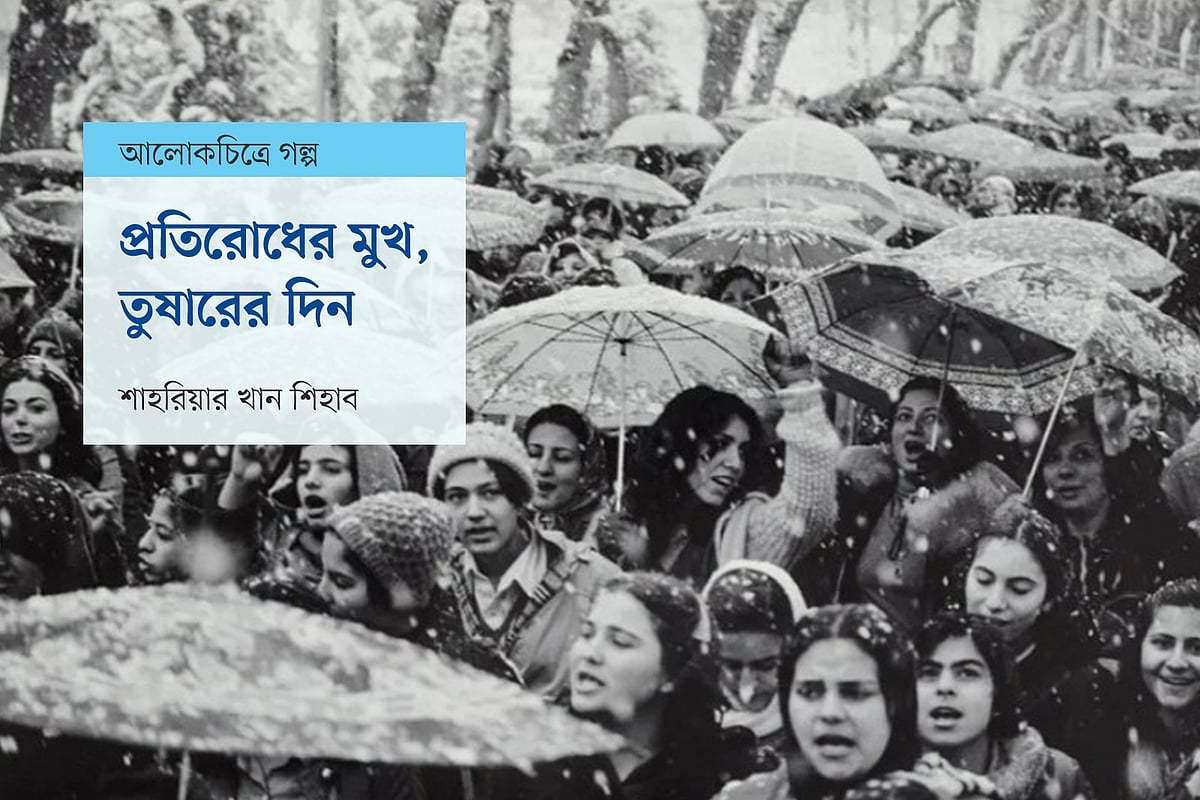
A series of iconic photographs, titled 'Witness 79' by Iranian photographer Hengameh Golestan, captures a pivotal moment in modern Iranian history: the protests against mandatory hijab in March 1979. These images transcend mere documentation of demonstrations, offering a profound glimpse into the clash between state power, revolution, and women's freedom. Golestan's lens focused on the tumultuous period following the Shah's fall, where the future remained uncertain but collective action was shaping history. The photographs depict a dense, continuous flow of women in Tehran, standing shoulder-to-shoulder under falling snow, their presence filling the frame and suggesting an even larger gathering extending beyond. Their primary demand was clear: the decision of whether or not to wear a hijab should rest with the individual woman, not the state. This struggle was framed not just as a fight for sartorial freedom but as a fundamental assertion of bodily autonomy. Golestan immersed herself in the movement, capturing the faces, voices, gestures, and resolve of the women directly. The visual composition, with umbrellas forming a collective canopy against the snow, adds a rhythmic and musical quality to the scene. The women's body language—clenched fists raised, mouths open in slogans, determined gazes—communicates a powerful sense of solidarity and individual resolve. Their attire reflects the urban, modern Iranian identity of the late 1970s, signifying a society familiar with education, civic life, and personal freedoms. The most striking element is the visible presence of women with uncovered hair, dusted with snow, which would soon become a focal point of intense political debate and a symbol of impending storm. The bare tree branches in the foreground further deepen the atmosphere of uncertainty and political tension, grounding the scene in Tehran University's historically significant protest grounds.
The 'Witness 79' photographs offer a critical counter-narrative to state-sanctioned historical accounts of the 1979 Iranian Revolution. While official histories often frame the revolution as a monolithic Islamist uprising, Golestan's images reveal the multifaceted nature of the movement, highlighting the presence of secular democratic aspirations and a vibrant civil society that questioned the new regime from its inception. The protests against mandatory hijab underscore a fundamental tension between state-imposed identity and individual autonomy, a conflict that continues to resonate in contemporary discussions about governance, personal freedoms, and the role of religion in public life. The event serves as a potent reminder that revolutions are rarely uniform, and the pursuit of freedom often extends beyond political power shifts to encompass deeply personal and cultural dimensions. The struggle over women's bodies and attire illustrates how deeply ingrained societal norms and individual rights can become battlegrounds for political control, with long-term implications for social cohesion and individual liberty in the decades to come.
AI-generated to prompt reflection — not editorial opinion, not advice, not a statement of fact. How this works.