Woman Dies After Burns at Candomblé Ritual; Husband Accused of Negligence
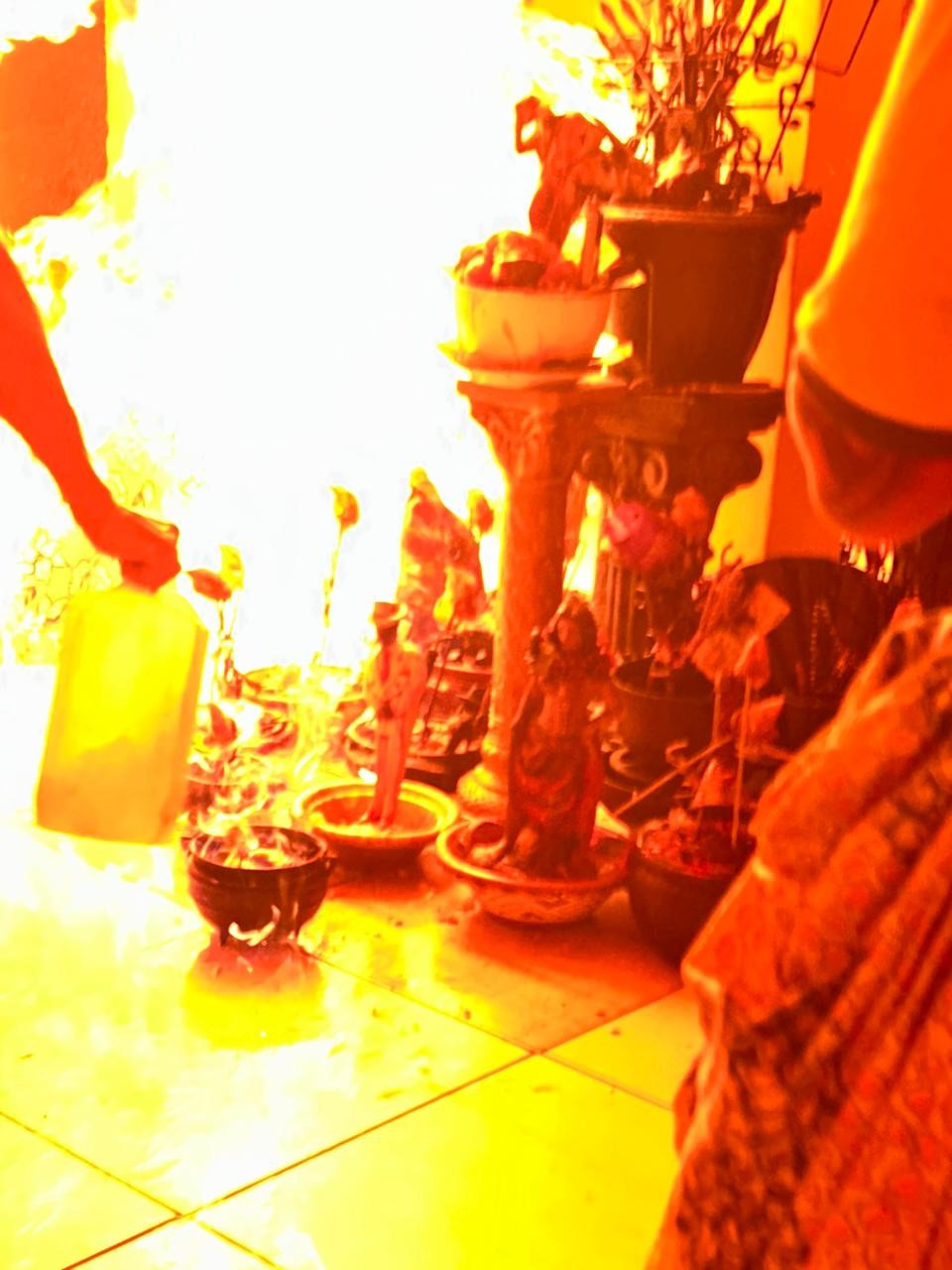
Caroline Pinto dos Santos died after sustaining severe burns to 65% of her body during a Candomblé ceremony in Rio de Janeiro's West Zone. Witnesses claim Gabriel Pimentel, husband of religious leader Thayane Alves, failed to provide aid to the victim. Pimentel is seen in video footage pouring ethanol into a bowl that was already aflame, causing an explosion that engulfed Santos. The terreiro's owner, Anderson Bruno de Andrade Júnior, stated in his testimony that Alves did not inform him about the use of flammable materials and that Pimentel was warned against using the ethanol. However, Pimentel allegedly used a moment of distraction to pour the fuel near Santos. A witness suggested Alves intended to film the ritual for social media. Santos's sister, Carina, reported that Caroline confirmed Pimentel did not offer help and was unaware fire would be used. Caroline reportedly used a bedsheet to extinguish the flames on her own body before being taken to Hospital Pedro II in Santa Cruz. She passed away on Thursday, the 9th, and was buried on Saturday, the 11th. Alves, who identified herself as yalorixá, stated the ritual was private, conducted solely by her and her husband, and described the incident as an unforeseeable accident. The case is being investigated by the 33rd DP (Realengo).
This tragic event highlights critical safety oversights in ritualistic practices, particularly those involving flammable substances in enclosed spaces. The investigation's focus on the alleged failure to provide immediate aid and the unauthorized use of accelerants points to potential negligence and a breakdown in established safety protocols. Future considerations for such ceremonies should involve rigorous risk assessments, clear communication of potential hazards among participants and organizers, and the implementation of emergency response plans. The incident also raises questions about the responsibility of religious leaders and organizers to ensure the safety of attendees, especially when introducing novel or inherently dangerous elements into traditional practices. Examining the incentive structures around social media documentation versus participant safety may also provide valuable insights into preventing future accidents.
AI-generated to prompt reflection — not editorial opinion, not advice, not a statement of fact. How this works.