Woman Startled by Two-Headed Snake Emerging from Kitchen Sink Drain in Brazil
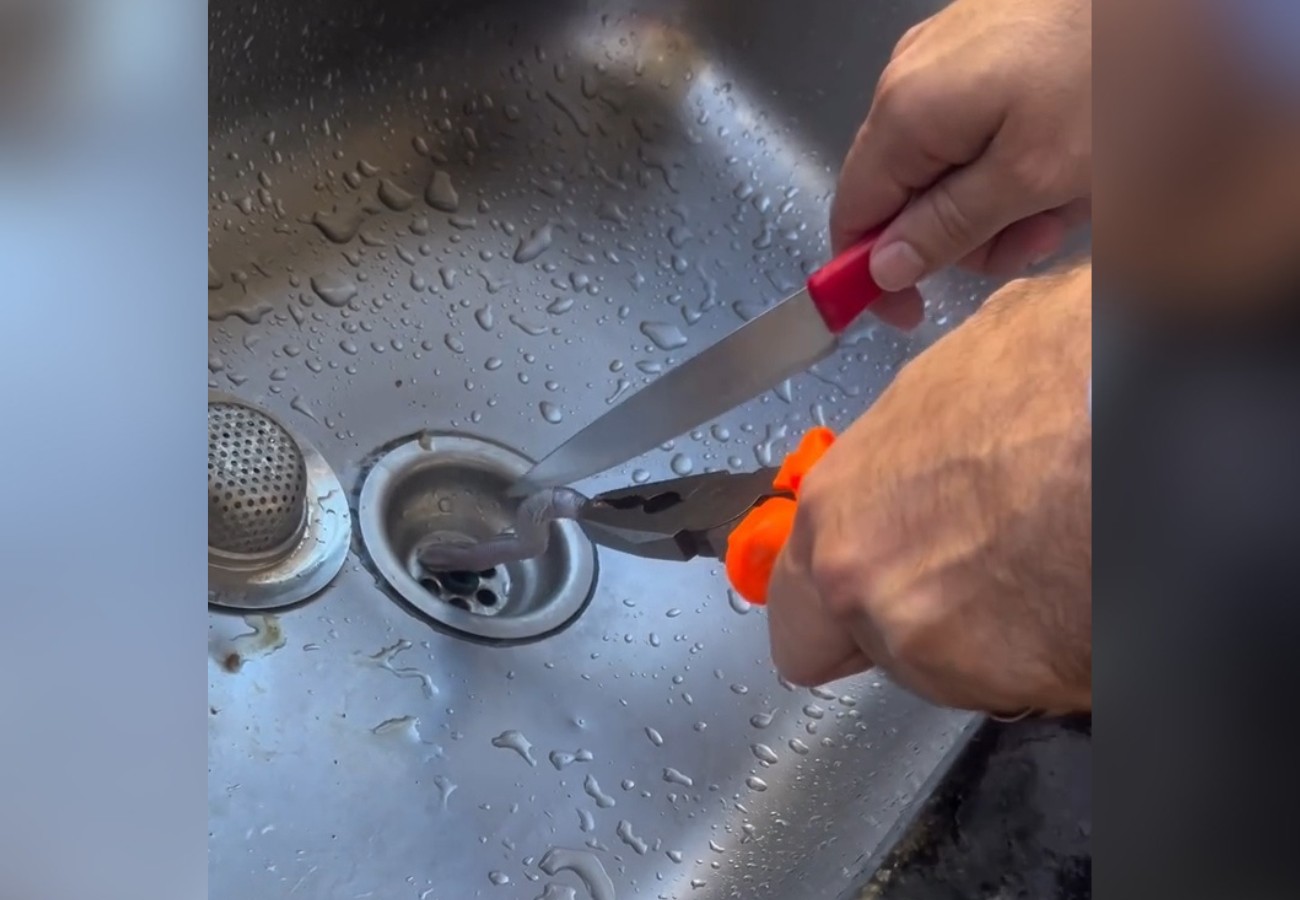
A woman in Palmas, Tocantins, Brazil, experienced a fright when an animal resembling a 'two-headed snake' emerged from her kitchen sink drain. The incident was captured on video by aesthetician and podiatrist Bruna Victor and subsequently shared on social media, where it garnered over 3 million views and 50,000 likes. Victor recounted noticing the creature after discarding coffee, initially mistaking its movement in the drain for steel wool. She described the object as "going up and down" and realized it was alive, prompting her to call her husband for assistance. Her husband attempted to remove the animal using pliers and a knife. Despite the initial shock, biologist Pedro Onça clarified that the creature is not a snake but an amphisbaenian, a burrowing animal that poses no danger to humans. Onça explained that amphisbaenians are fossorial, meaning they live underground, and play a vital role in soil health, similar to earthworms. He noted that the common name 'two-headed snake' arises because its head resembles its tail, and it can move backward and raise its tail to deter predators. Amphisbaenians are typically found in gardens and may appear when soil is disturbed. In this specific case, the biologist hypothesized that the amphisbaenian likely entered the residence through the drainage system.
This incident highlights the unexpected ways wildlife can interact with human infrastructure, particularly in urban or suburban environments. The public's fascination with the 'two-headed snake' phenomenon underscores a common misunderstanding of certain animal adaptations. The biologist's explanation clarifies the creature's harmless nature and ecological role, offering an opportunity to educate the public about local fauna and the importance of biodiversity. From a systems perspective, the amphisbaenian's presence in a domestic drainage system suggests potential vulnerabilities or connectivity issues within the built environment that could allow for such intrusions. Future urban planning and home maintenance might consider such ecological interfaces to minimize surprise encounters and promote coexistence.
AI-generated to prompt reflection — not editorial opinion, not advice, not a statement of fact. How this works.