Woman Travels 18 Hours to Cut Her Own Hair Before Religious Image
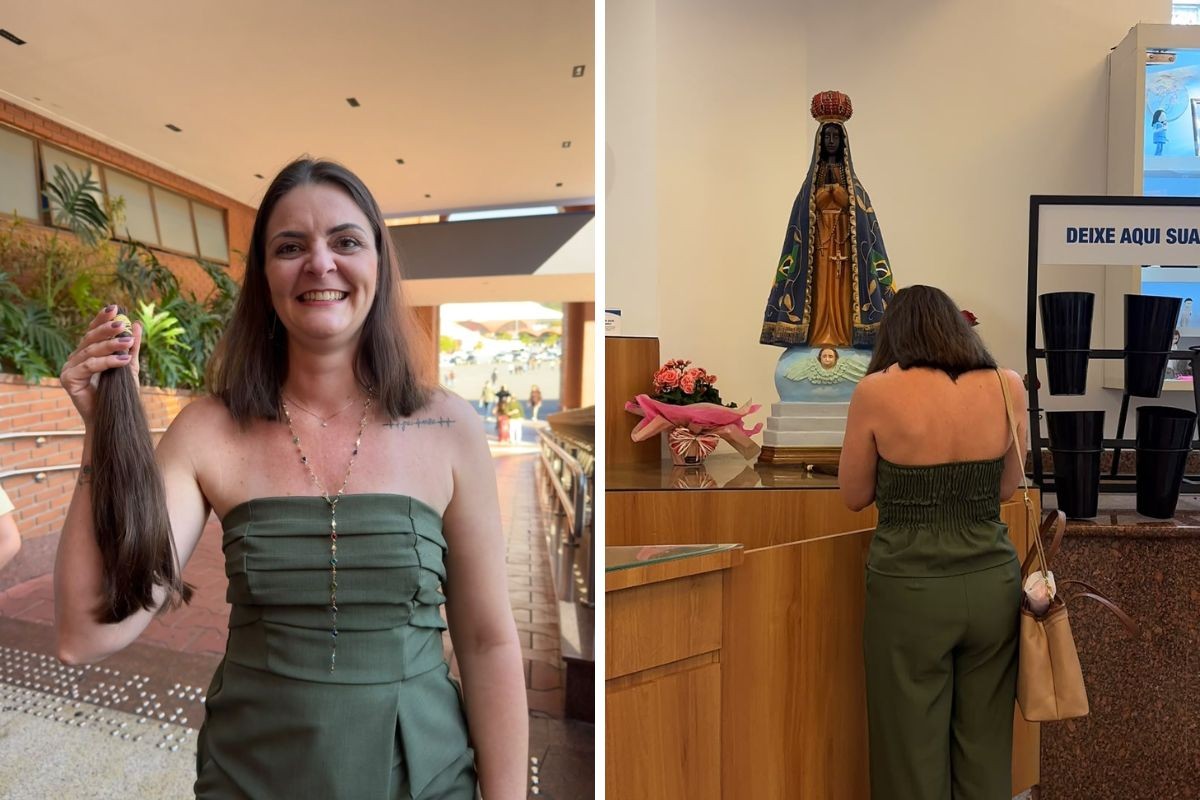
A woman named Bárbara Basseti traveled approximately 18 hours from Linhares, Espírito Santo, to the National Sanctuary in Aparecida, São Paulo, to cut her own hair in front of the image of Our Lady of Aparecida. This act was motivated by deep gratitude and faith, fulfilling a long-held dream of visiting the sanctuary with her daughters. Basseti described her hair as one of her few vanities and chose to offer it as a symbol of thanks at the feet of the religious figure. The decision to undertake this journey and gesture came after years of family hardships, particularly exacerbated by the pandemic. She was accompanied by her mother, two daughters, her godmother, and her godmother's two children during the visit on Wednesday, the 15th. After cutting her hair, Basseti left it in the Sanctuary's 'Sala das Promessas' (Room of Promises), a place where devotees leave objects as tokens of gratitude for answered prayers. She stated that this location was the most fitting place to leave her hair, considering it a small offering compared to the blessings she has received. The video of the act, shared on social media without expectation, quickly went viral, eliciting a surprising mix of positive and negative reactions. Basseti acknowledged the presence of criticism but emphasized the overwhelming support she received, which she found very comforting.
This event highlights the profound intersection of personal hardship, faith, and symbolic gestures within religious practice. The individual's extensive journey and the personal sacrifice of cutting her hair represent a deeply felt expression of gratitude, underscoring the powerful role of faith in navigating adversity. The viral nature of the video points to broader societal engagement with acts of devotion and the varying interpretations they can evoke, from solidarity to skepticism. From a systems perspective, such acts can be seen as individual coping mechanisms and expressions of agency in the face of systemic challenges like economic instability and personal loss. The 'Room of Promises' itself functions as a physical manifestation of collective hope and shared experience among believers, reinforcing social bonds through ritual.
AI-generated to prompt reflection — not editorial opinion, not advice, not a statement of fact. How this works.