Women's Violence Escalates Across Bangladesh, Council Reports
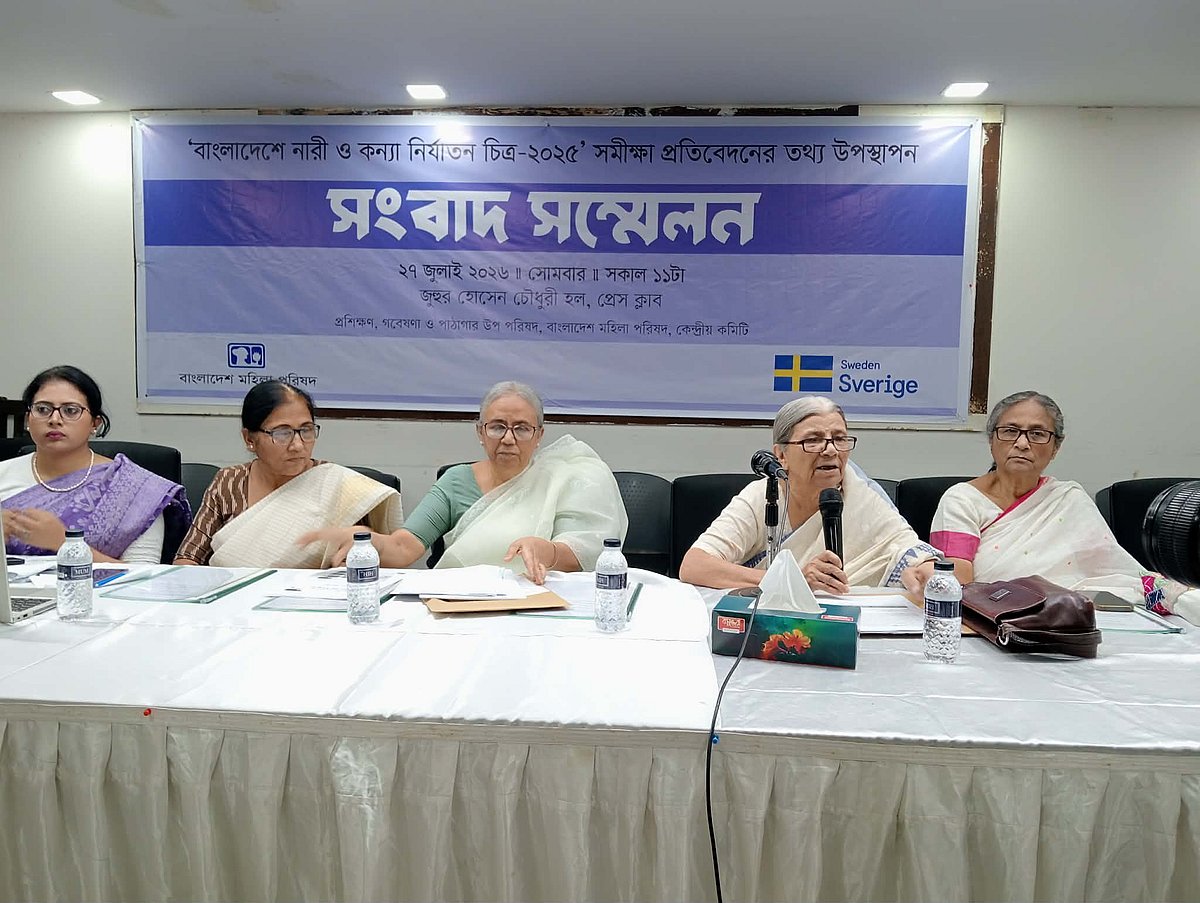
Violence against women and girls in Bangladesh is rising across nearly all categories, including rape, gang rape, murder, suicide, sexual harassment, and child marriage, according to a new report by the Bangladesh Mahila Parishad (Women's Council). The report highlights that young girls are most vulnerable to gang rape, attempted rape, and suicide, while adult women face the highest risk of murder, rape, and sexual harassment. The council attributes this alarming trend to impunity, lengthy investigations, interference from influential individuals, and a societal culture that absolves perpetrators. This surge in violence is no longer just a women's issue but a national security, justice, and human rights crisis.
The "Women and Girl Child Violence Picture-2025" survey, based on 14 national dailies, found homemakers disproportionately affected by murder (58%), suicide (63%), and dowry-related violence (94%). Student girls are most at risk of attempted rape (80%), suicide (67%), gang rape (39%), and child marriage (100%). Both homes and educational institutions are becoming increasingly unsafe for women and girls.
During a press conference in Dhaka, Mahila Parishad President Fawzia Moslem emphasized that women face risks at every life stage, from six to over sixty. She noted the alarming increase in rape cases among girls aged six to nine, underscoring that victims are never to blame, but rather the perpetrators and the societal mindset that enables such crimes. Moslem also called for media to report not only incidents but also their social and structural causes, while protecting victims' identities and highlighting perpetrators' accountability. The council urged for effective law enforcement, swift justice, accountability, and increased social awareness to combat this crisis.
The report from Bangladesh Mahila Parishad starkly illustrates a systemic failure to protect women and girls, driven by a confluence of judicial and societal shortcomings. The analysis points to a deeply entrenched culture of impunity, where delays in legal processes, external influence, and societal victim-blaming create an environment where perpetrators face minimal consequences. This perpetuates a cycle of violence that transcends individual incidents, impacting national security and human rights. In the context of an increasingly digitized world, the challenge lies in leveraging technology and robust legal frameworks to ensure accountability, while simultaneously fostering a societal shift away from victim-shaming and towards collective responsibility for preventing violence. The report's call for media to delve into structural causes and for unified action by civil society suggests a recognition that isolated legal remedies are insufficient without broader social and institutional reform.
AI-generated to prompt reflection — not editorial opinion, not advice, not a statement of fact. How this works.