Workers rescued after hanging from hotel facade during strong winds in Santos, Brazil
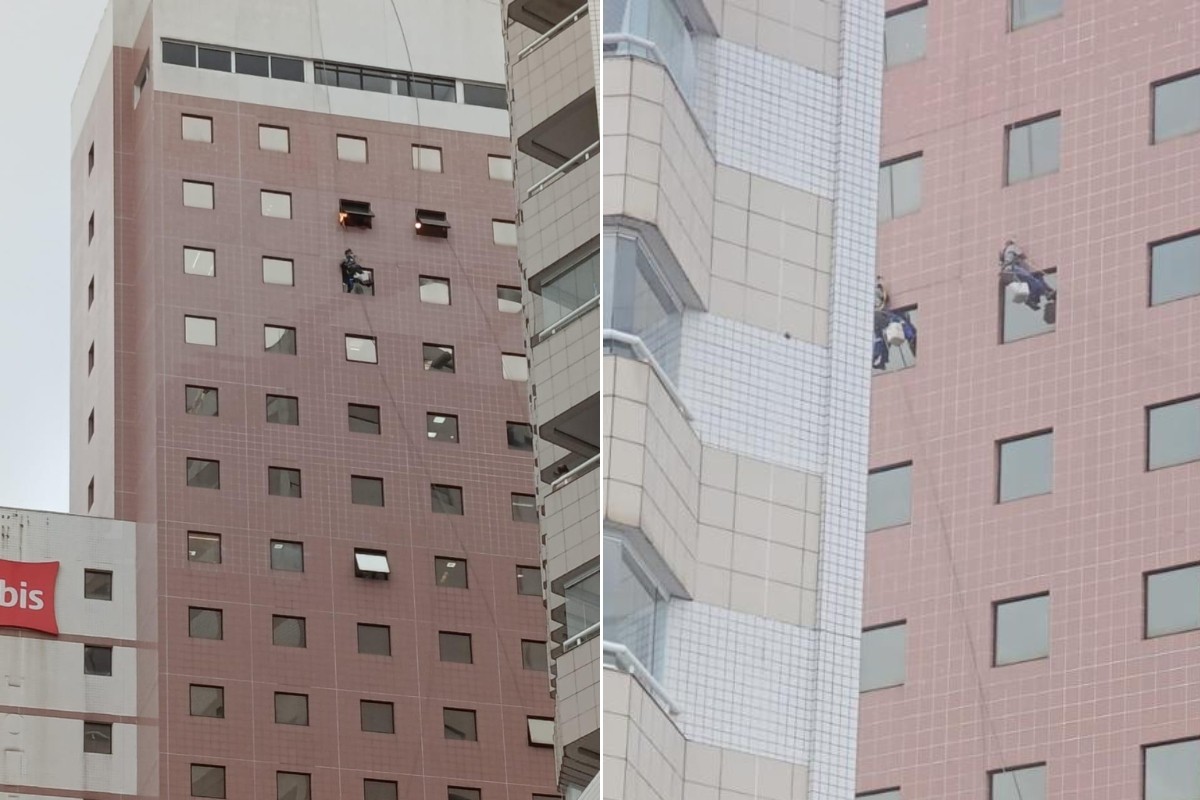
Two maintenance workers were rescued after being left dangling from a hotel's safety ropes during a severe windstorm in Santos, São Paulo, Brazil. The incident occurred around 12:50 PM on Wednesday, November 29th, amidst powerful gusts exceeding 100 km/h that impacted the Southeast region, causing widespread destruction and at least five fatalities. The workers, who were on the hotel's facade for maintenance, stated they did not receive advance warnings from their supervisors or the Civil Defense about the impending high winds. They explained that they were already at a significant height and did not notice their cell phones ringing due to calls from their bosses and civil firefighters attempting to alert them. The strong winds began while they were actively working, leaving them with no option but to hold on tightly. After their rescue by the Fire Department, one of the workers, who wished to remain anonymous, discovered that over 10 calls had been made to warn them. He mentioned that they do not use their cell phones while secured on the ropes, which led to them missing the alerts. The supervisors had promptly contacted the building's civil firefighters to assist in the rescue operation. The worker described the experience as a "fright" and expressed a strong desire to return home to his family. The severe weather caused extensive damage across the Baixada Santista region, including numerous roof destructions, building collapses, and over 80 fallen trees. The São Paulo state government deployed its Crisis Cabinet to the coast to address the aftermath. Tragically, the storm claimed at least five lives across the Southeast: three in São Paulo and two in Rio de Janeiro. In Santos, a homeless man died after being hit by a falling tree. Another fatality occurred in São Sebastião when a fishing boat capsized. In Cesário Lange, a man died when a large tree fell on his car. In Rio de Janeiro, a former Botafogo football player was among two victims of a wall collapse.
This incident highlights critical communication failures in high-risk work environments, particularly during extreme weather events. The disconnect between on-site safety protocols, management's awareness of weather warnings, and the workers' ability to receive those warnings underscores a systemic vulnerability. While the immediate rescue prevented further harm, the near-miss suggests a need to re-evaluate communication channels for workers in elevated or exposed positions, ensuring that alerts are not only broadcast but also demonstrably received and acknowledged, especially when standard operating procedures (like not using phones on ropes) can impede communication. The broader context of the storm's destructive impact and fatalities across the region points to the increasing importance of robust, multi-layered emergency preparedness and response systems that can effectively disseminate and confirm critical information to all vulnerable parties, from construction crews to the general public, in the face of escalating climate-related hazards.
AI-generated to prompt reflection — not editorial opinion, not advice, not a statement of fact. How this works.