Workplace Mental Health: From HR Topic to Legal Obligation
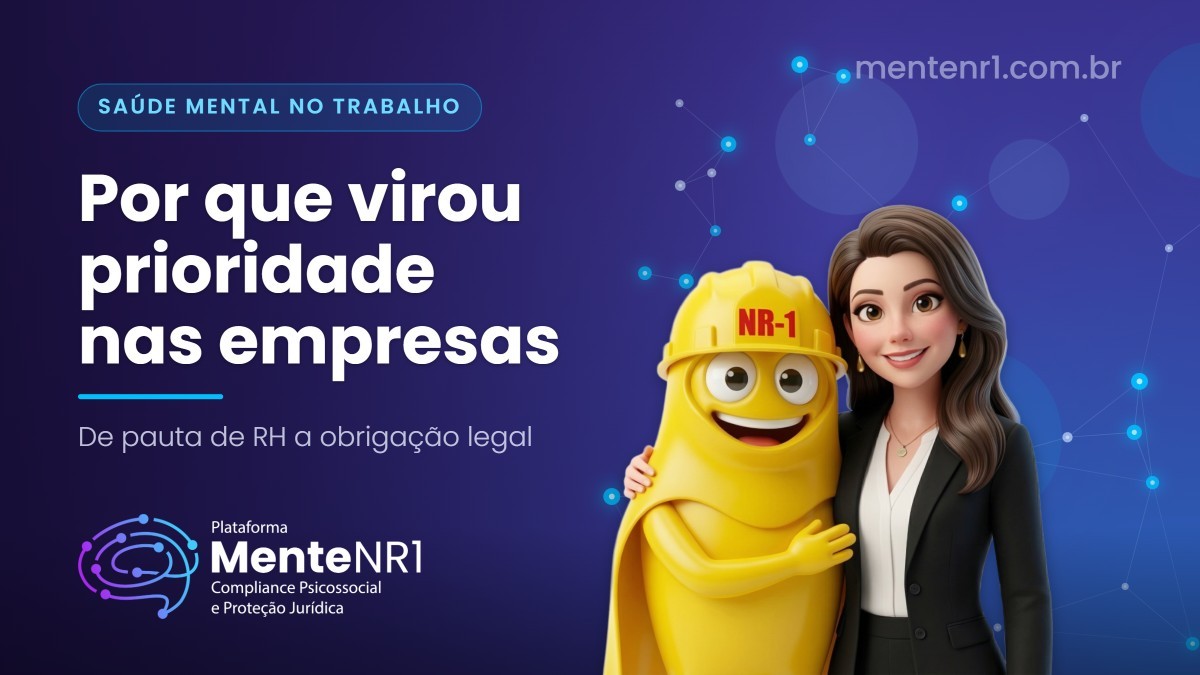
Workplace mental health has transitioned from informal discussions to a management priority and, more recently, a legal requirement in companies. This shift is driven by several factors, including a rise in mental health issues leading to work absences and increased costs for businesses through absenteeism, presenteeism, and employee turnover. Furthermore, legal frameworks have evolved, with NR-1 now mandating the management of psychosocial risks. Society and workers are also increasingly demanding healthier work environments, pushing companies to address mental well-being proactively.
While well-being initiatives remain voluntary and beneficial, the management of psychosocial risk is now a mandatory aspect of NR-1 compliance. Tools like MenteNR1 aim to assist companies in identifying, documenting, and addressing these risks, complementing existing well-being programs and occupational safety efforts. However, these tools do not absolve employers of their technical and legal responsibilities, nor do they guarantee immunity from penalties. The effectiveness of compliance ultimately depends on the actual implementation of required measures, as outlined in the tool's terms of use.
The elevation of workplace mental health from a peripheral HR concern to a core management and legal obligation reflects a broader societal recognition of psychological well-being's impact on productivity and organizational stability. This regulatory shift, exemplified by NR-1, incentivizes companies to integrate psychosocial risk management into their operational frameworks, moving beyond voluntary wellness programs. As AI and automation continue to reshape work, understanding and mitigating mental health risks will be crucial for maintaining a resilient and effective workforce. Companies that proactively address these challenges not only comply with legal mandates but also foster environments conducive to innovation and long-term sustainability, potentially reducing costs associated with employee turnover and lost productivity.
AI-generated to prompt reflection — not editorial opinion, not advice, not a statement of fact. How this works.