World AI Conference 2026 Showcases Robots for Home, Advanced Chips, and AI Companions
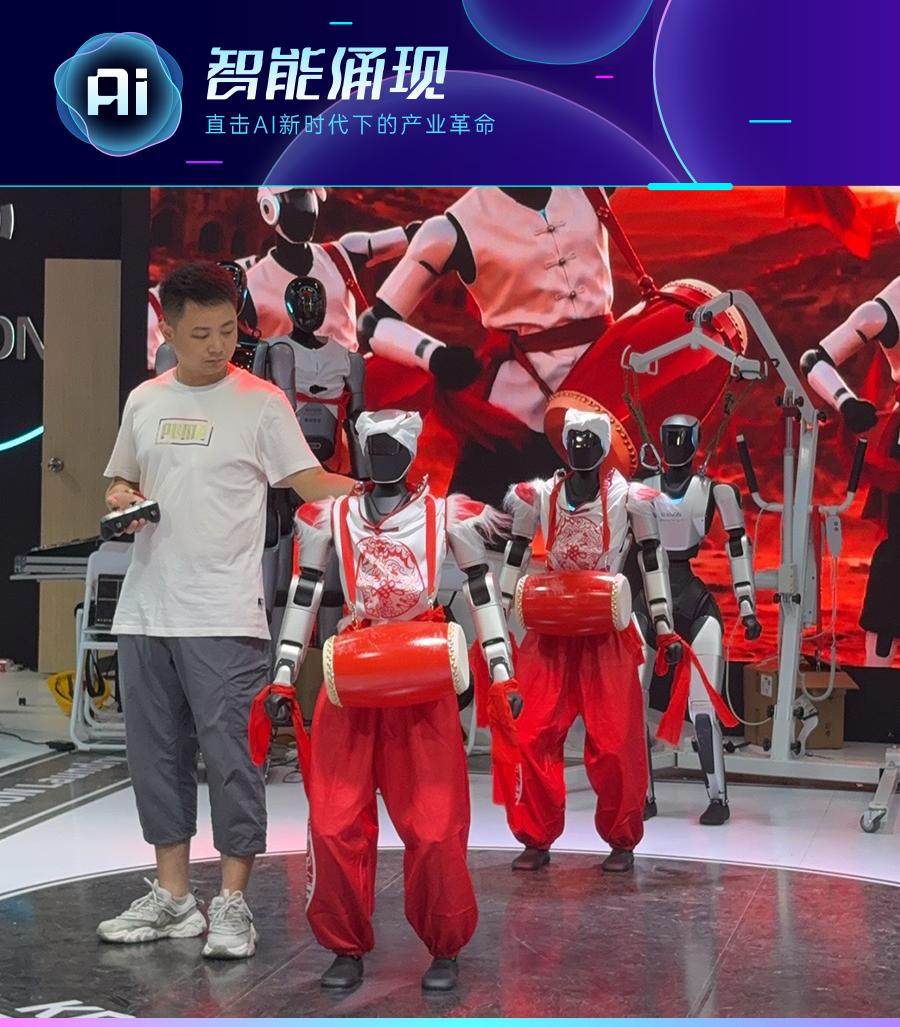
The 2026 World Artificial Intelligence Conference (WAIC) in Shanghai, held amidst near 40-degree Celsius heat, marked a significant expansion with over 100,000 square meters of exhibition space, hosting more than 1,100 companies and showcasing over 3,000 exhibits, including over 300 global product premieres. Ticket prices surged, reflecting the event's immense popularity, and the conference featured a distinguished lineup of Turing Award and Nobel Prize winners. This year's WAIC demonstrated a "full bloom" of AI applications, moving beyond theoretical discussions to practical implementation, with over 108 chips, 261 large models, and 208 embodied intelligence terminals on display. The focus has shifted from "can models and embodiment work?" to "how can AI be actively used?", with AI poised to become colleagues, assistants, and lifestyle companions.
Embodied intelligence was a major highlight, featuring diverse robots ranging from the "Doujiao" (Bean Feet) robot, which lowers the barrier for embodied development through accessible components, to UUV's impressive humanoid robots performing dances and boxing, and their groundbreaking 2.8-meter tall, bi-pedal/quadrupedal transforming mecha, the GD01, priced at 3.9 million yuan. Accelerating Evolution showcased their RoboCup-winning Booster T series robots powered by NVIDIA Thor chips, designed for educational and industrial inspection tasks. Hengzhi Future presented the "Xiaotian" robot dog, emphasizing realistic pet companionship and offering secondary development interfaces. Nubia introduced its AI pet robot, iMoochi, designed for emotional companionship with distinct personalities and its own language, alongside its new AI phone, NaviX Ultra.
AI is increasingly integrating into home life, with robots capable of making coffee, baking pizza, and handling tasks like taking out trash, fetching packages, and playing with children, with some multi-functional home assistants available for rent at 3,000 yuan per month. Companies like Fourier, Knowin, and Lexiang Technology displayed desktop-sized and foldable robots for household chores and caregiving. The trend towards "world models" was evident, with companies like AiShi showcasing game engines for real-time interactive generation and Shengshu focusing on embodied AI brains. The semiconductor sector remained a hot topic, with numerous companies exhibiting advanced chips. Tencent presented its Agents, including WorkBuddy and CodeBuddy, alongside impressive AI models for image, 3D, and world generation. Ant Group highlighted its AI health assistant, "Afu," which has facilitated significant weight loss and provides health consultations, particularly aiding rural doctors. Baichuan Intelligence introduced "Baixiaoyi," an AI family doctor for comprehensive health management. Rokid demonstrated AI glasses capable of voice-activated payments, integrating with Alipay and WeChat. Educational AI hardware, such as Lingyuzhou's handheld device and Xinyan's Bubbo robot, focused on teaching and programming for children. iFlytek showcased an AI blackboard that acts as an AI teaching assistant, capable of replicating teacher personas.
The 2026 World AI Conference underscores a significant shift from AI research and development to widespread practical application, particularly in embodied intelligence and personal assistance. The proliferation of diverse robotic forms, from pet-like companions to sophisticated mechs and household helpers, reflects advancements in AI's ability to interact with and perform tasks in the physical world. The emphasis on "world models" and agents suggests a move towards more integrated and context-aware AI systems that can understand and operate within complex environments. While the rapid commercialization and diverse applications, including home care and education, indicate strong market demand and technological progress, future challenges will likely involve ensuring safety, ethical deployment, and equitable access to these increasingly capable AI systems. The drive towards AI becoming an integral part of daily life, as seen in smart home devices and AI-powered health services, points to a future where human-AI collaboration is commonplace, necessitating robust governance frameworks to manage societal integration.
AI-generated to prompt reflection — not editorial opinion, not advice, not a statement of fact. How this works.