World Cup Concludes: Few Innovations, Many Star Performances, Tired Players Managed
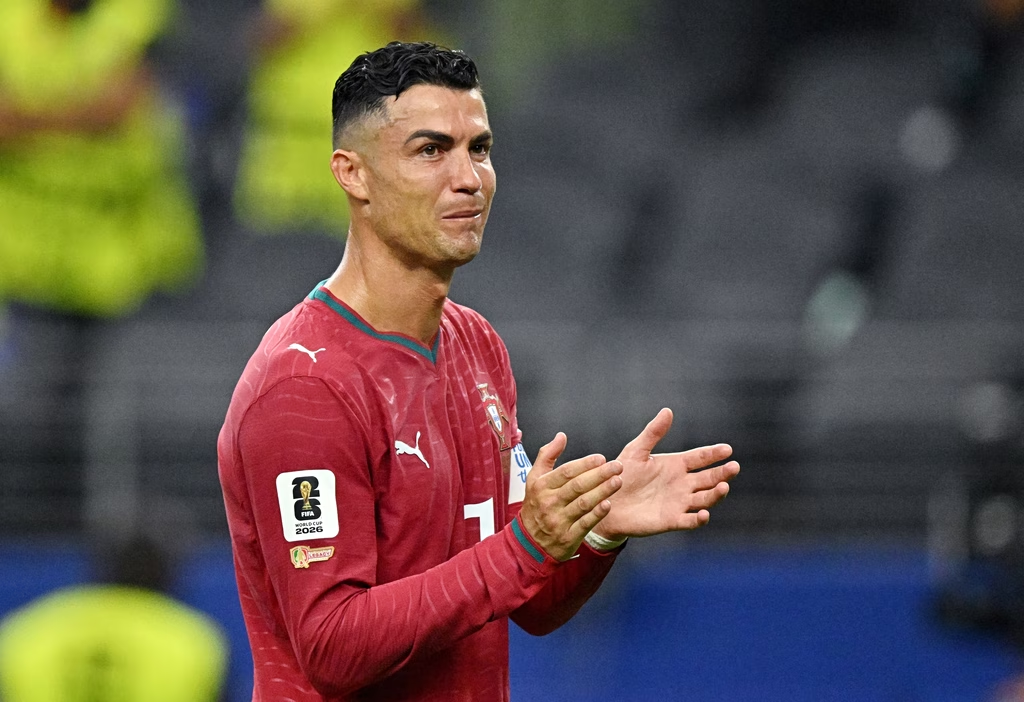
The recent World Cup has concluded, showcasing numerous impressive performances from star players but few significant tactical innovations. Compared to the World Cup held in Qatar four years ago, which took place in December and saw players in better condition, this tournament primarily focused on managing fatigued athletes. The management of these tired players was described as exemplary, but this focus inherently limited the scope for tactical novelty. The defensive strategies, in particular, were noted in the original text. While the tournament delivered exciting individual displays, the overall tactical landscape remained largely unchanged.
The tournament's structure, necessitating player management due to fatigue, highlights a systemic tension between peak athletic performance and demanding competition schedules. This approach, while optimizing player availability, may inadvertently stifle the emergence of novel tactical approaches that often arise from players operating at their physical and mental zenith. Future tournament planning could explore scheduling adjustments or modified formats to better balance player welfare with the potential for strategic evolution, considering the long-term impact on the sport's development and competitive dynamism.
AI-generated to prompt reflection — not editorial opinion, not advice, not a statement of fact. How this works.