World Cup Sees Record-Breaking Shot Speeds Exceeding 120 km/h
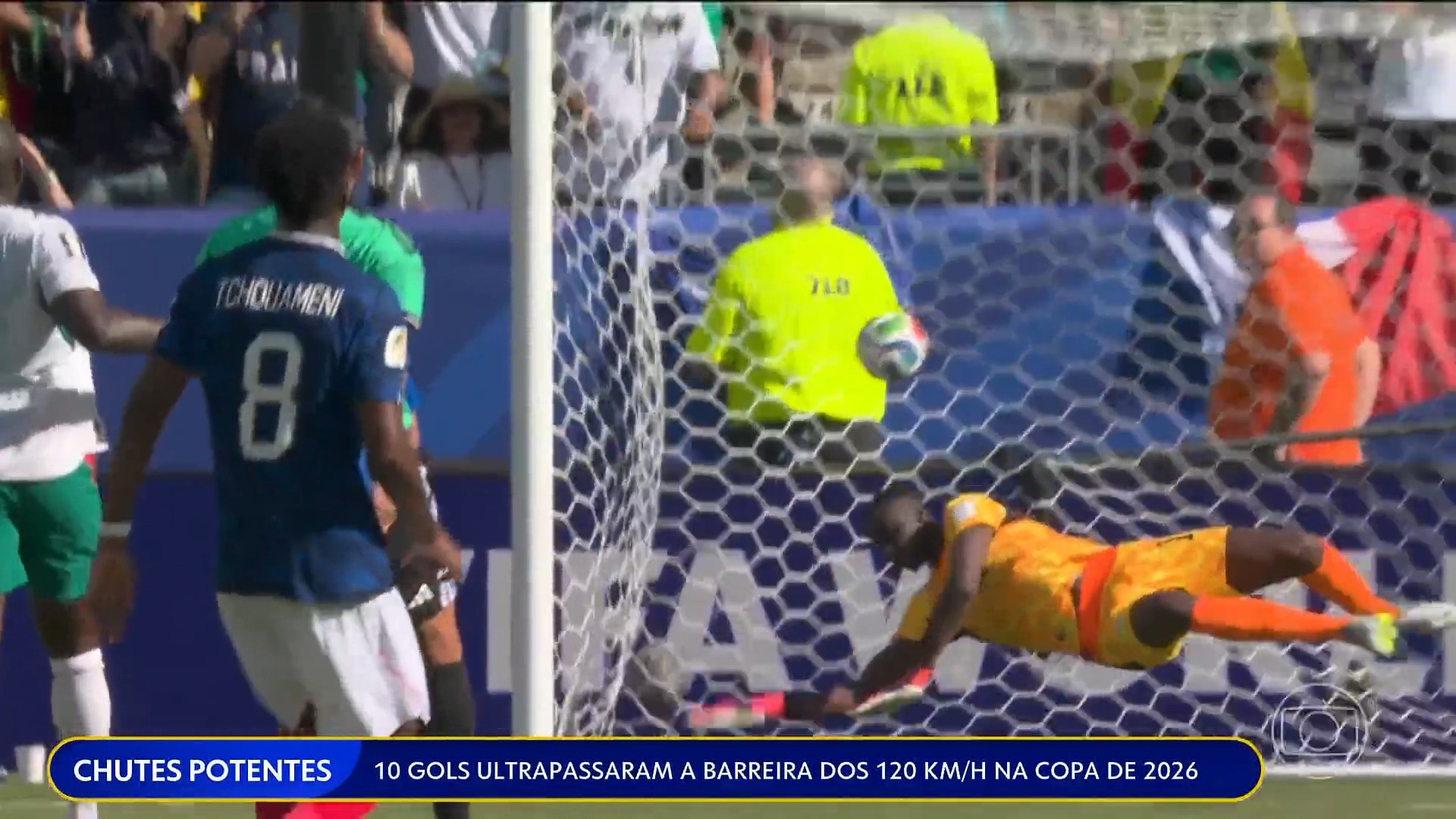
The current World Cup is distinguished by increasingly powerful shots, with technology now capable of measuring shot speeds, revealing many exceeding 120 km/h. Players are combining precision with immense leg strength, adjusting their body positioning to execute these high-velocity strikes. According to commentator Paulo Nunes, this shooting prowess is a direct result of dedicated training and belief in one's ability. The official World Cup ball contains a chip that precisely records play data, including shot velocity. At least ten shots in the tournament have already surpassed 120 km/h. Pape Gueye of Senegal recorded one of the highest speeds, with a shot exceeding 130 km/h. Such speeds mean the ball reaches the goal in under half a second, significantly reducing a goalkeeper's reaction time. Players are also effectively utilizing shots from outside the penalty area to bypass well-positioned defenses, a tactic that has nearly doubled in frequency compared to the previous World Cup. Top scorers like Messi, Haaland, Mbappé, and Harry Kane have all employed this strategy. Nunes emphasizes that confidence, daily training, and consistent work are crucial for developing the skill and assurance needed to score consistently. The competition's top scorer race is the most prolific since 1958, with players readily taking shots whenever an opportunity arises.
The technological integration in the World Cup, specifically the ball's chip, provides objective data on player performance, shifting focus from subjective commentary to quantifiable metrics. This advancement highlights the evolving physical demands of professional football, where incremental gains in power and speed, enabled by sophisticated training and biomechanics, can translate into significant tactical advantages. The increased frequency and success of long-range shots suggest a strategic adaptation by teams to overcome increasingly organized defenses, pushing the boundaries of offensive play. As technology continues to permeate sports, future iterations may offer even deeper insights into player conditioning, tactical execution, and the very limits of human athletic capability within the sport.
AI-generated to prompt reflection — not editorial opinion, not advice, not a statement of fact. How this works.