World Cup Viewers: Diverse Group Finds Common Ground
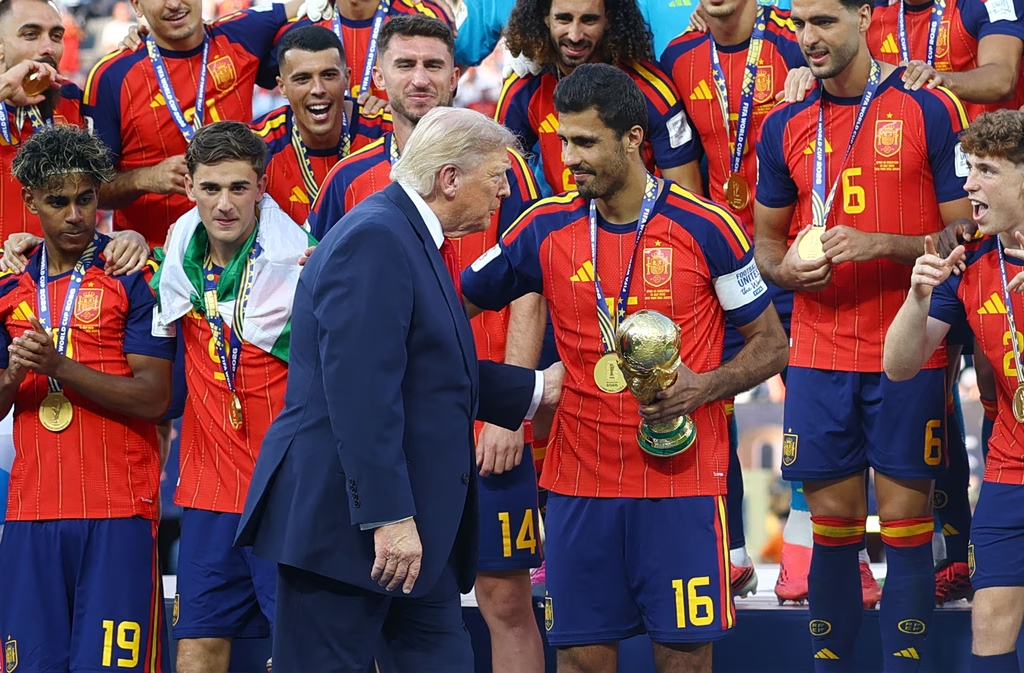
The author observed the final matches of the World Cup while on vacation, surrounded by a diverse group of individuals. This group spanned a wide age range, from 13 to 77 years old, and comprised people with varied professions and interests, including artists and public employees. Despite their differing backgrounds and potential lack of shared references, the experience highlighted how the event fostered a sense of unity. The author noted that even when people try to disregard stereotypes, certain unifying elements can emerge. The article suggests that major sporting events like the World Cup possess a unique ability to bring together disparate individuals, creating shared emotional experiences and common talking points across generational and professional divides. This observation underscores the power of collective engagement in popular culture.
Major international sporting events like the World Cup demonstrate a powerful capacity to transcend individual differences and foster collective engagement. This phenomenon can be understood through the lens of shared identity formation and the creation of temporary, unified social spaces. While diverse groups may initially lack commonalities, the shared emotional investment in a competitive spectacle can create powerful bonding experiences. This highlights the potential for carefully curated cultural moments to bridge societal divides, offering a temporary respite from fragmentation. Understanding the psychological and sociological mechanisms behind this collective effervescence is key to leveraging such events for broader social cohesion, though the long-term impact remains a subject for continued observation.
AI-generated to prompt reflection — not editorial opinion, not advice, not a statement of fact. How this works.