World's Largest Digital Camera Begins Observing the Universe
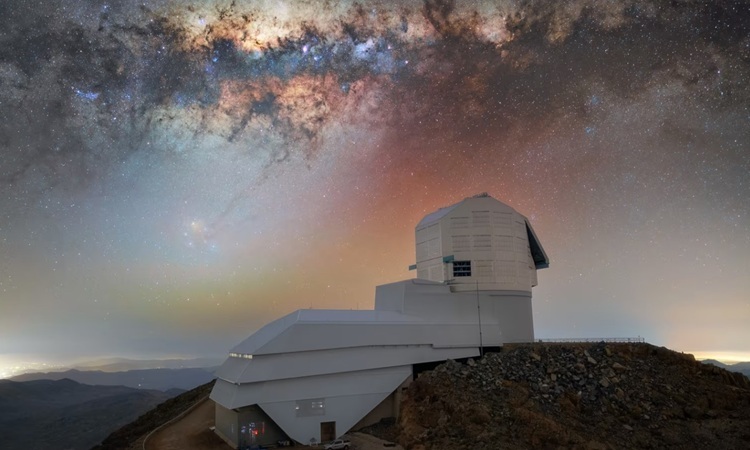
The Large Synoptic Survey Telescope (LSST) camera, located at the Vera C. Rubin Observatory in Chile, has officially begun its operations. This groundbreaking camera is the largest digital camera ever constructed, designed to capture the most detailed images of the cosmos to date. It is poised to provide unprecedentedly clear footage of stars and galaxies across the universe. The LSST camera's primary mission is to conduct a comprehensive survey of the night sky, cataloging billions of celestial objects. This ambitious project aims to unlock new understandings of dark matter, dark energy, and the evolution of the universe. Scientists anticipate that the data gathered will revolutionize fields such as astronomy and cosmology. The observatory itself, named after pioneering astronomer Vera C. Rubin, is equipped with advanced technology to support this massive undertaking. The commencement of the LSST camera's observations marks a significant milestone in humanity's quest to explore and comprehend the vastness of space.
The deployment of the LSST camera represents a significant advancement in observational astronomy, enabling unprecedented data collection on a cosmic scale. This technological leap facilitates deeper empirical investigation into fundamental cosmological questions, such as the nature of dark energy and dark matter. By providing a vastly expanded and more detailed dataset, the LSST camera's observations will empower researchers to test and refine existing theoretical models of the universe's structure and evolution. The project's success hinges on robust data processing and interpretation frameworks, which will be crucial for translating raw observations into scientific discovery over the next decade. This initiative underscores the ongoing trend of leveraging sophisticated AI and big data analytics to push the boundaries of scientific understanding in the AI era.
AI-generated to prompt reflection — not editorial opinion, not advice, not a statement of fact. How this works.