World's Largest Dinosaur, Patagotitan, Discovered in Patagonia
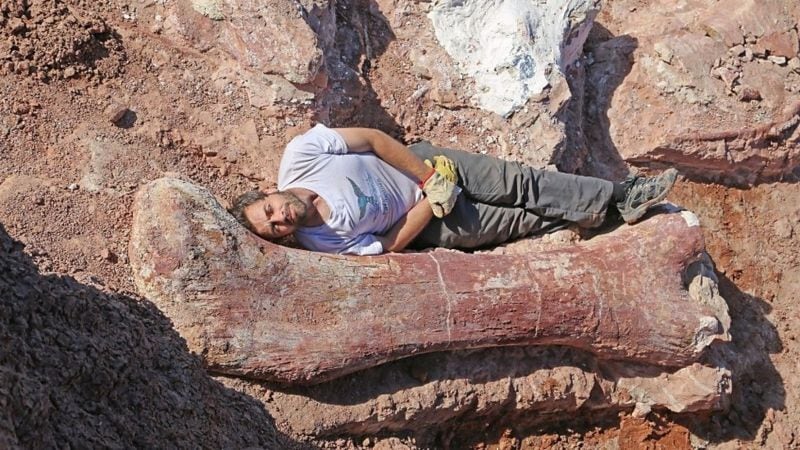
The Museo Egidio Feruglio (MEF) in Trelew, Argentina, is currently exhibiting fossils of dinosaurs that lived over 200 million years ago. Among these remarkable specimens is the Patagotitan, recognized as the largest dinosaur discovered on Earth. This significant find highlights the rich paleontological history of the Patagonia region. The museum's exhibition allows visitors to explore the scale and existence of these colossal ancient creatures. The discovery and ongoing study of the Patagotitan provide invaluable insights into prehistoric life and the evolution of dinosaurs. Researchers continue to analyze the fossils to understand more about the creature's anatomy, behavior, and environment. The exhibition serves as a crucial educational resource, bringing the distant past to life for the public.
The discovery and exhibition of the Patagotitan in Patagonia represent a significant advancement in paleontology, offering a tangible connection to Earth's prehistoric past. This find underscores the importance of regional scientific institutions like the MEF in preserving and interpreting global heritage. The ongoing study of such large specimens provides critical data for understanding biomechanics, evolutionary pressures, and ancient ecosystems. As AI and advanced imaging techniques become more prevalent in scientific research, future discoveries may accelerate our understanding of dinosaur life, potentially revealing new insights into their physiology and societal structures within their environments. This also prompts reflection on how such discoveries can foster international scientific collaboration and public engagement with science.
AI-generated to prompt reflection — not editorial opinion, not advice, not a statement of fact. How this works.