World's Largest Ray Species Filmed Off Brazil Coast During Whale Research
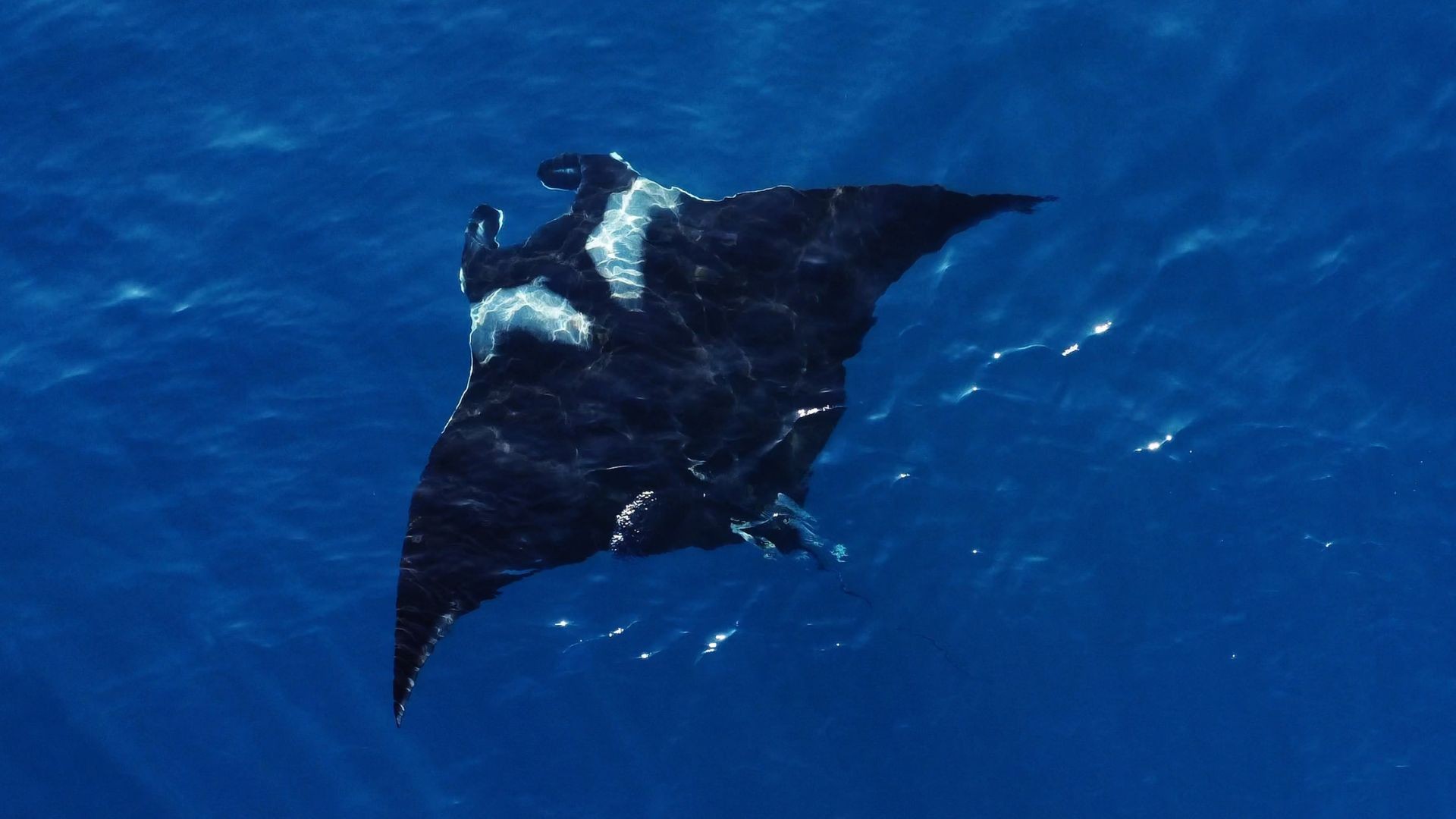
During a scientific expedition off the coast of Guarapari, Espírito Santo, Brazil, researchers encountered and filmed the world's largest ray species, the manta ray (Mobula birostris). The rare sighting occurred on Monday, May 27th, while the team was monitoring whales approximately 20 nautical miles offshore. The manta ray, which can reach up to eight meters in wingspan and weigh around two tons, circled the research vessel for approximately 45 minutes. Initially mistaken for a dolphin or shark, the marine biologist Bruna Rezende Gonçalves, coordinator of the Jubarte.lab project, eventually identified the creature. The research team, affiliated with the Porto de Tubarão Cetacean Monitoring Program, temporarily halted their whale observation to document the unexpected visitor. Using drone footage, scientists were able to estimate the ray's wingspan at approximately 5.8 meters, identifying it as an adult individual. This marks only the third recorded sighting of a manta ray by this team in the last decade along the Espírito Santo coast. Marine biologist João Luiz Gasparini confirmed the identification and noted that while Mobula birostris is found along the Brazilian coast, sightings are infrequent. The species faces threats from accidental fishing, ship strikes, and pollution. Manta rays are known for their docile nature, late reproduction, and plankton-based diet, living up to 20 years.
The sighting of a Mobula birostris, the world's largest ray, during routine whale monitoring highlights the ecological richness of Brazil's coastal waters and the serendipitous nature of scientific discovery. This event underscores the importance of sustained marine research programs, which not only track target species like whales but also contribute to understanding broader biodiversity. The use of drone technology for photogrammetry demonstrates an evolving capacity for non-invasive data collection, offering valuable insights into the size and health of marine megafauna. The documented threats to manta rays, including bycatch and pollution, emphasize the ongoing need for robust conservation strategies and international cooperation to protect these vulnerable giants. Future research could focus on identifying migration patterns and critical habitats to inform more effective protective measures against human-induced pressures.
AI-generated to prompt reflection — not editorial opinion, not advice, not a statement of fact. How this works.