World's Slowest Concert in Halberstadt to Conclude in Year 2640
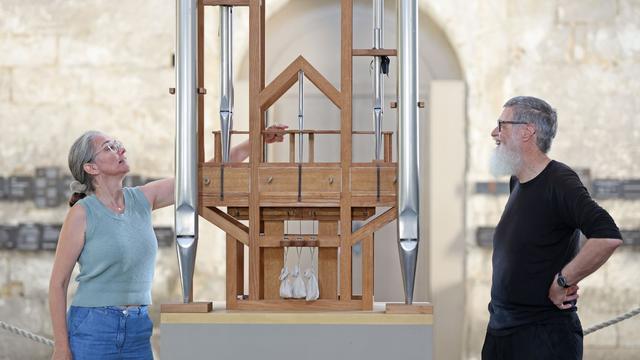
An experimental music project in Halberstadt, Germany, is aiming to become the world's slowest concert, with its final note scheduled to sound in the year 2640. The ongoing performance began in 2001 and is designed to last for 639 years. The piece, titled "Klokk," is being performed in the St. Burchardi church, a former monastery. The music is generated by a complex organ that uses the slow decay of materials to produce sound over time. The project is funded by donations and ticket sales, with the intention of creating a unique and enduring artistic experience. Visitors can purchase tickets for specific dates, including the final performance in 2640, allowing them to be part of this extraordinary musical journey. The concert's extreme duration challenges conventional notions of musical performance and audience engagement, inviting contemplation on time, art, and legacy.
This long-term musical performance in Halberstadt challenges traditional temporal frameworks of artistic consumption, prompting reflection on the nature of endurance and legacy in the digital age. The project's reliance on slow, physical processes for sound generation contrasts sharply with the instantaneous nature of digital media, highlighting a potential societal yearning for tangible, long-form experiences. As AI increasingly influences creative output and consumption patterns, such initiatives may represent a counter-movement, emphasizing patience, deep engagement, and the enduring power of physical art. The economic model, dependent on future ticket sales, introduces an intriguing element of intergenerational investment in art, raising questions about value perception across centuries and the sustainability of such ambitious, multi-generational projects.
AI-generated to prompt reflection — not editorial opinion, not advice, not a statement of fact. How this works.
