Wreckage of missing Boeing 737 cargo plane found off Pakistan coast; crew search continues
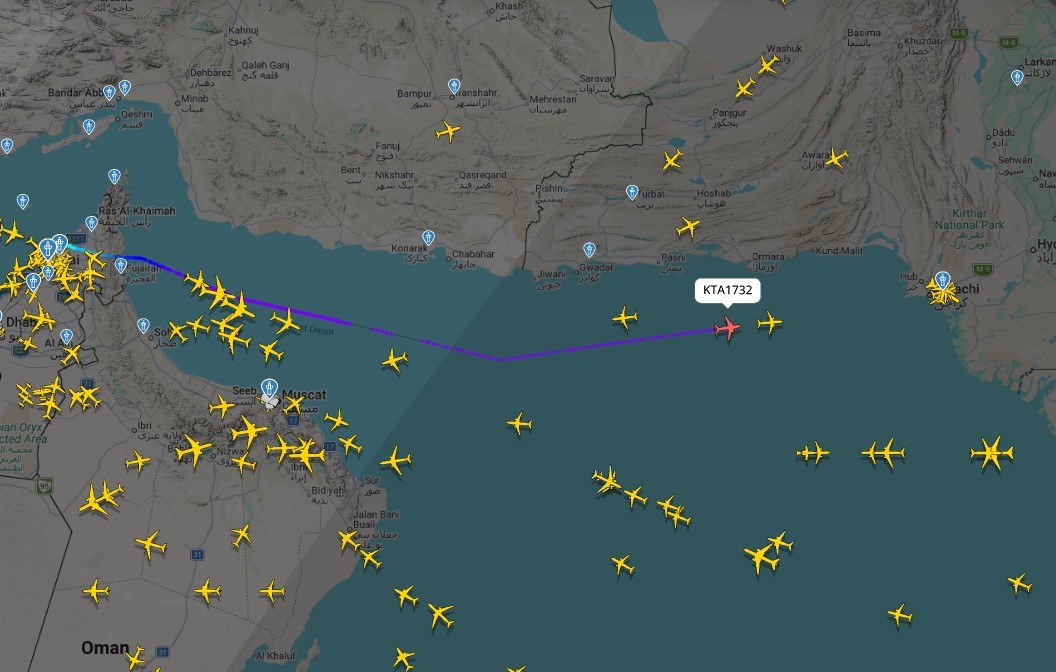
Pakistani rescue teams discovered wreckage of a Boeing 737 cargo plane on Wednesday, May 8, approximately 98 kilometers south of Ormara port. The aircraft had disappeared the previous night, May 7, after reporting a navigation system issue during a flight from Sharjah, United Arab Emirates, to Karachi, Pakistan. The wreckage was found 12 hours after the plane went missing during an offshore search operation. Efforts are ongoing to locate the five crew members on board: two pilots, two engineers, and one support staff member. The Pakistan Navy and Maritime Security Agency are deploying significant air and sea resources for this search. The cargo plane, operated by K2 Airways, communicated its navigation problem at 9:18 PM local time. Air traffic control lost contact shortly after, with radar indicating a rapid loss of altitude and communication failure within minutes. Flight tracking data from Flightradar24 revealed erratic altitude changes in the final moments, including a rapid descent of about 1,500 meters in under a minute, followed by a sharp climb and then a steep dive. The last recorded data showed the plane at approximately 335 meters altitude, descending at an extremely unusual rate of 400 km/h. The specific aircraft model, a Boeing 737-400, is an older variant, originally delivered in 1999 and converted to cargo in 2012. This was the sole aircraft in K2 Airways' fleet, having entered service with the company this year. This incident would mark Pakistan's first fatal air accident since May 2020, when a Pakistan International Airlines Airbus A320 crashed in Karachi, resulting in 97 fatalities.
The discovery of wreckage from the K2 Airways Boeing 737 cargo plane, following a reported navigation system failure and erratic flight path, highlights critical safety considerations in aging aircraft operations and air traffic management. The extreme altitude fluctuations recorded by Flightradar24 suggest a potential loss of control, necessitating a thorough investigation into the aircraft's mechanical integrity, the crew's response, and the effectiveness of air traffic control procedures. The incident underscores the importance of robust maintenance protocols for older aircraft models and the need for advanced monitoring systems capable of detecting and responding to critical flight anomalies in real-time. Examining the operational history of this specific aircraft and K2 Airways' safety management systems will be crucial for understanding the contributing factors and preventing future occurrences, particularly as the aviation industry balances fleet modernization with the continued use of established aircraft designs.
AI-generated to prompt reflection — not editorial opinion, not advice, not a statement of fact. How this works.