Wreckage of Pan Am Plane Lost 74 Years Ago Found Off Puerto Rico
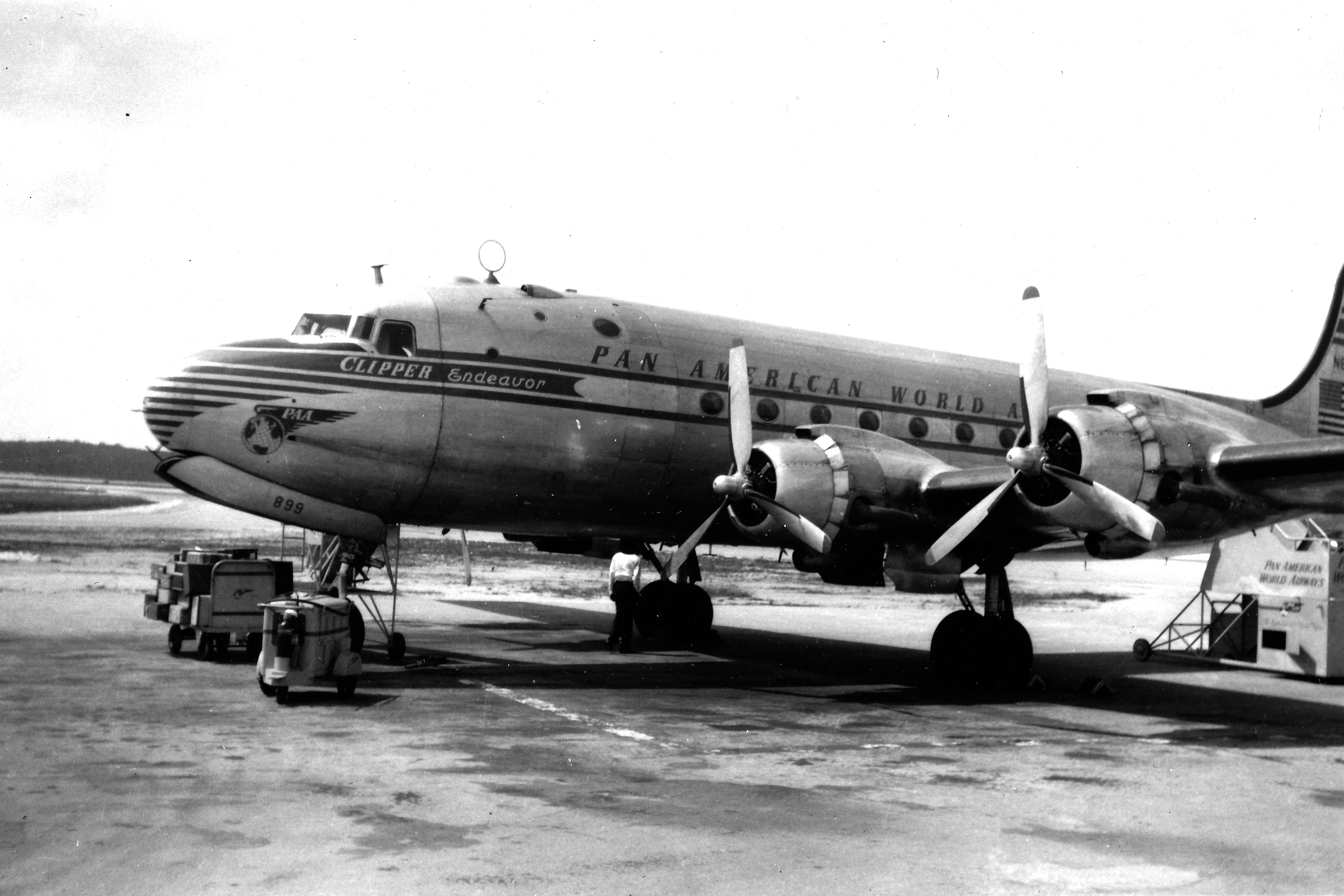
The wreckage of the Pan American World Airways (Pan Am) Clipper Endeavour, which disappeared 74 years ago, has been discovered 610 meters below sea level off the coast of Puerto Rico. The aircraft, a Douglas DC-4, crashed on April 11, 1952, following multiple engine failures shortly after takeoff. It was en route from Puerto Rico to New York with 64 passengers and five crew members. The pilot was forced to make an emergency water landing, and while all aboard survived the initial impact, many struggled to access life vests and rafts as the plane sank rapidly. Ultimately, only 17 of the 69 people on board survived. This tragic event served as a critical catalyst for significant reforms in aviation safety. Modern regulations requiring mandatory pre-flight safety instructions, detailing the use of life vests and location of emergency exits, were implemented as a direct result of the confusion and loss of life during the Clipper Endeavour's sinking. The expedition to locate the wreckage was a collaborative effort led by the Air/Sea Heritage Foundation, in conjunction with Discovery Channel's Expedition Unknown program and other organizations. The discovery, made in June and announced recently, was facilitated by a drone equipped with sonar, which identified the fuselage and tail sections of the aircraft. The find is significant not only for commemorating the past but also for potentially offering hope for locating other lost aircraft, such as Malaysia Airlines Flight MH370.
The rediscovery of the Clipper Endeavour wreckage, 74 years after its tragic crash, highlights the enduring impact of historical aviation incidents on contemporary safety protocols. The event underscores a critical feedback loop in technological systems: initial failures, followed by loss of life, then systemic reform, and finally, the validation of those reforms through subsequent discoveries. This narrative prompts reflection on how past tragedies, often fading from public memory, continue to shape present-day safety measures. The expedition's success, enabled by advanced sonar technology and historical research, also offers a potential model for future deep-sea searches, promising new avenues for resolving long-standing mysteries in aviation and maritime history. It serves as a reminder that technological advancement, coupled with persistent investigation, can bring closure and understanding to events that have long remained unresolved.
AI-generated to prompt reflection — not editorial opinion, not advice, not a statement of fact. How this works.