Wreckage of Pan Am plane lost 74 years ago, killing 52, found at sea
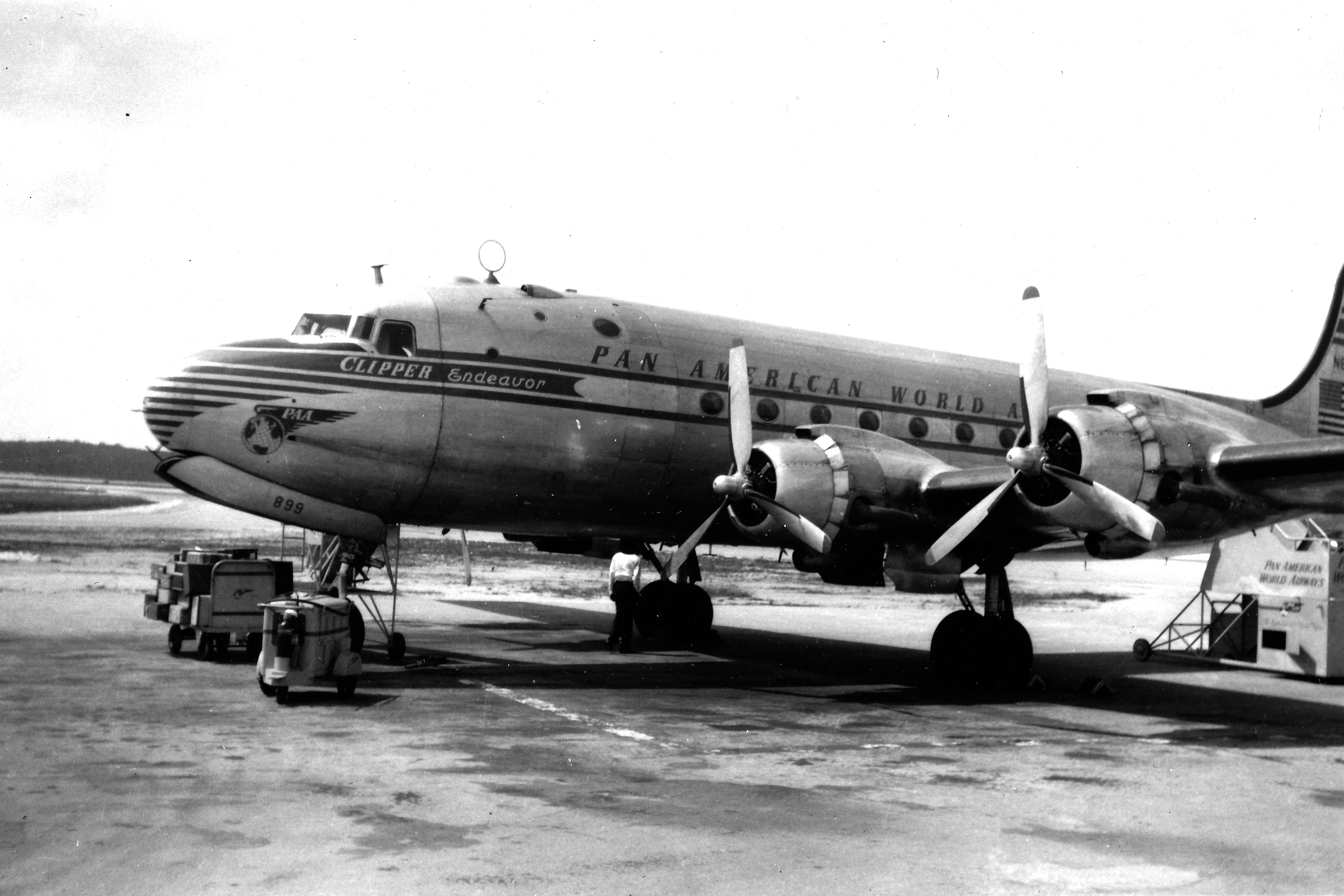
The wreckage of a Pan Am airliner, missing for 74 years, has been discovered at sea by explorers, the Pan Am Historical Foundation announced on Tuesday, July 21, 2026. The 1952 accident claimed the lives of 52 people and significantly influenced the evolution of commercial aviation safety standards. The aircraft, a DC-4 named Clipper Endeavor, lost engine power shortly after departing from Puerto Rico with New York as its destination, forcing an emergency landing in the ocean. Of the 69 individuals on board, 17 survived the initial impact. Survivors reported that the immediate aftermath was chaotic, with difficulties in accessing life vests and deploying life rafts, leading to the aircraft sinking within minutes. The fuselage and tail of the plane were located last month at a depth of approximately 2,000 feet (610 meters) using an autonomous underwater drone equipped with sonar. Aviation safety expert John Cox highlighted the incident's role as a catalyst for safety advancements, including improved flotation devices and pre-flight briefings, stating it was a crucial step toward modern aviation safety. Procedures such as instructing passengers on emergency exits and life vest usage, which became standard after the disaster, are still practiced today. The discovery also offers a glimmer of hope for families of victims from other maritime aviation tragedies, such as the disappearance of Malaysia Airlines Flight MH370 in 2014. The search for the Clipper Endeavor began in 2019 after researcher Russ Matthews found a lead from a baggage tag. Years of archival research, including documents from Pan Am, the U.S. Coast Guard, and aviation authorities, along with witness accounts from U.S. Air Force pilots who observed the crash, eventually pinpointed the accident's location. An initial search attempt in 2024 was unsuccessful due to adverse weather conditions. This year, Matthews collaborated with Deep Sea Vision, a specialized underwater exploration company, which deployed a drone that located the wreckage in a designated search area.
The recovery of the Clipper Endeavor's wreckage after 74 years provides a tangible link to a pivotal moment in aviation history, underscoring the critical role of such incidents in driving safety innovations. The event's legacy highlights how systemic failures, even when addressed through regulatory and procedural changes, can have profound long-term impacts. This discovery may also inform ongoing efforts to locate other deep-sea wrecks, potentially offering closure and valuable data for future investigations. Examining the historical context reveals a pattern where technological advancements and rigorous safety protocols emerge from tragic events, suggesting a continuous feedback loop between risk and resilience in the aviation sector. The successful use of advanced sonar and drone technology in this recovery demonstrates the evolving capabilities for deep-sea exploration and accident investigation, a trend likely to accelerate in the coming decade.
AI-generated to prompt reflection — not editorial opinion, not advice, not a statement of fact. How this works.