Writer Augusto Cury Officially Becomes Avante Party's Presidential Candidate
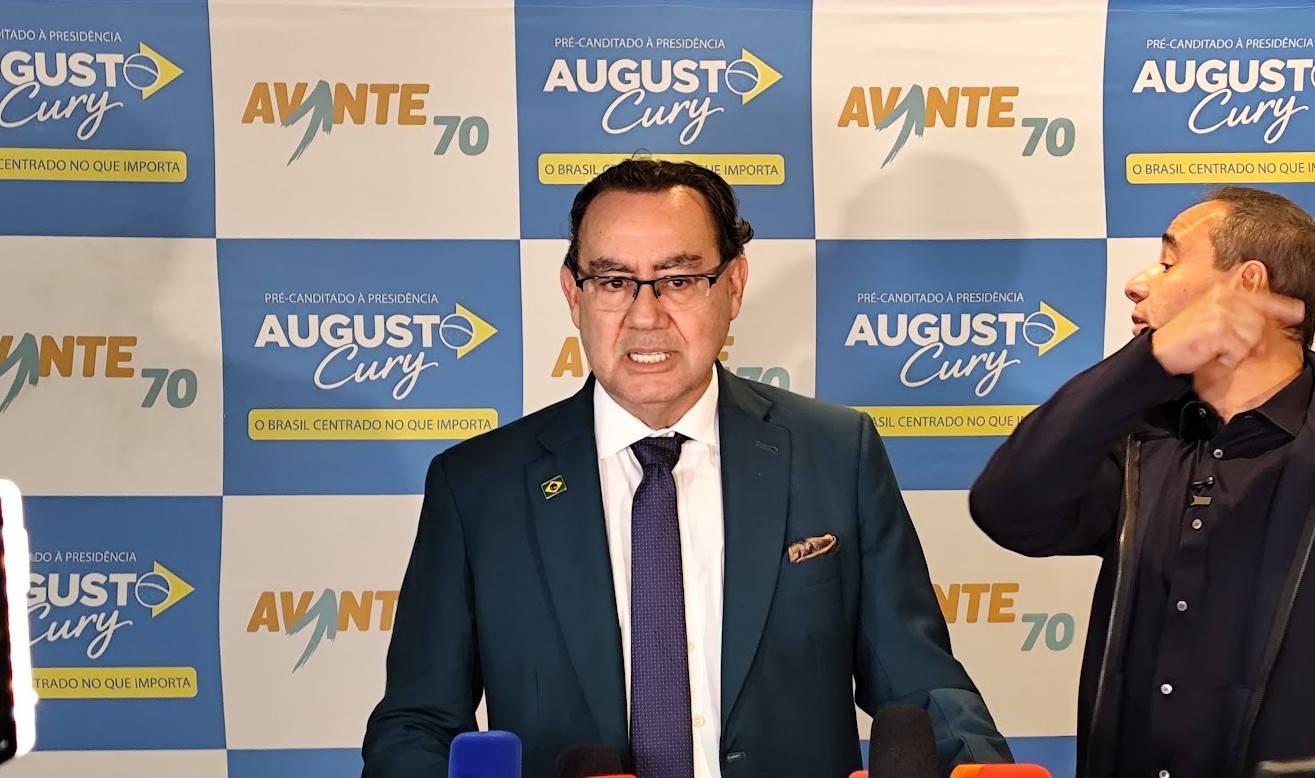
The Avante party has officially nominated acclaimed writer Augusto Cury as its presidential candidate for the upcoming election. Cury, also a psychiatrist known for his self-help books, announced his intention to propose a significant governmental reform if elected. He plans to shift Brazil's presidential system to a semi-presidential one, where a prime minister would manage the nation's daily affairs while the president focuses on strategic matters, the armed forces, and foreign policy. Cury suggested that São Paulo Governor Tarcísio de Freitas would be his preferred choice for the prime minister role. The officialization event, held in São Paulo, was attended by prominent political figures including Governor Tarcísio de Freitas, São Paulo Mayor Ricardo Nunes, and the President of the Legislative Assembly of São Paulo, André do Prado. Governor Freitas praised Cury's courage in entering the presidential race. Cury also outlined his priorities, emphasizing support for "32 million neurodivergent individuals," encompassing conditions like Autism Spectrum Disorder, ADHD, and dyslexia, though official statistics on these broader groups are limited. He also advocated for an "extraordinary education" and a "golden age of education," referring to teachers as "cooks of knowledge." Practical proposals include implementing full-time schooling and technical education in high schools. Regarding potential alliances, Cury mentioned past discussions with former Minas Gerais Governor Romeu Zema about a unified ticket, but indicated this possibility is now largely ruled out, amidst ongoing uncertainty about his own vice-presidential pick.
The nomination of Augusto Cury, a prominent self-help author, introduces a unique dynamic to the presidential race, potentially appealing to a segment of the electorate seeking alternative leadership and novel policy approaches, particularly concerning mental health and education. Cury's proposal to transition to a semi-presidential system represents a significant structural shift, aiming to optimize governance by delineating responsibilities between a president and a prime minister. This move could be interpreted as an attempt to address perceived inefficiencies in the current presidential model by introducing a more hands-on administrative role. The potential selection of Governor Tarcísio de Freitas for a prime ministerial role suggests a strategic alignment aimed at consolidating political influence and leveraging existing executive experience. The focus on neurodivergent individuals and educational reform signals an effort to address underserved populations and long-term societal development, aligning with emerging global trends in inclusive policy and human capital investment. The exploration of alliances, while currently uncertain, reflects the strategic maneuvering characteristic of electoral politics, balancing the pursuit of broader coalition support against the preservation of party identity and candidate autonomy.
AI-generated to prompt reflection — not editorial opinion, not advice, not a statement of fact. How this works.
