X-ray Telescope Captures 'Breath' of Ancient Black Hole
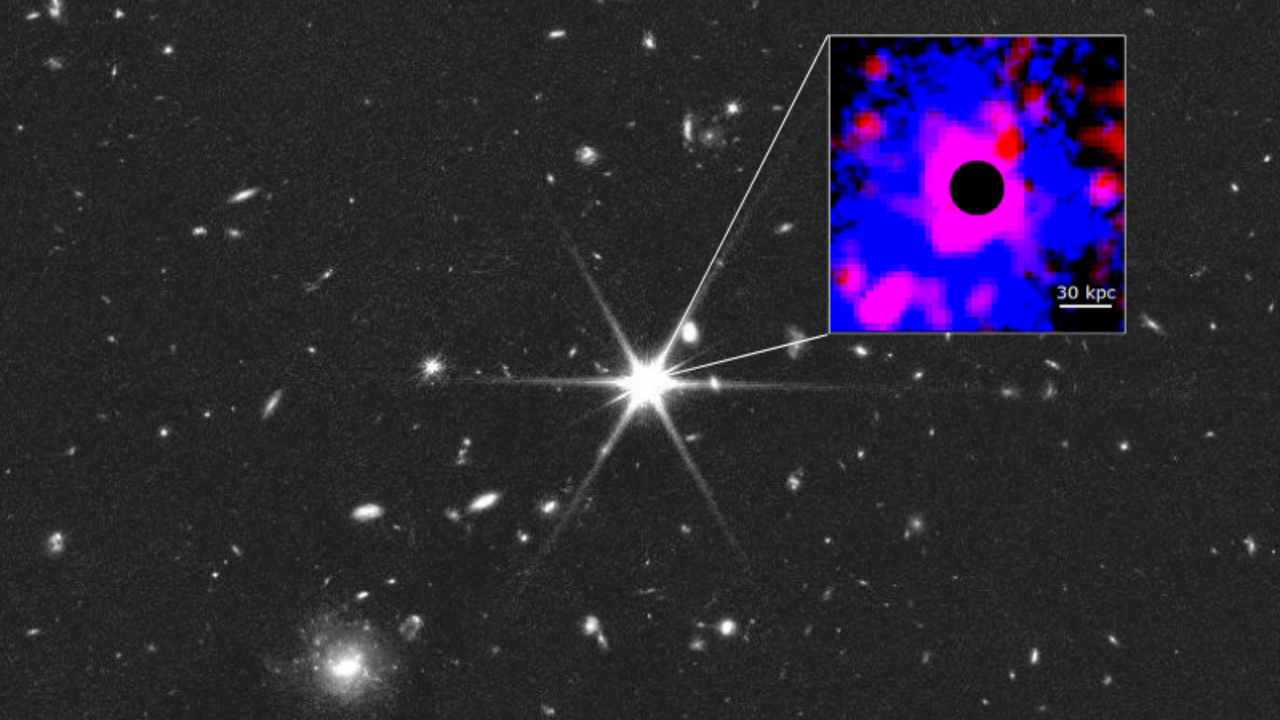
Astronomers using the X-ray telescope have detected the extremely hot exhaust gases emanating from some of the earliest quasars. These quasars are massive cosmic objects known for their intense brightness, which is fueled by supermassive black holes actively consuming matter. The detected 'breath' represents the outflow of material from these ancient, powerful celestial engines. This discovery provides new insights into the behavior and evolution of quasars and the supermassive black holes at their centers during the early universe. Understanding these phenomena is crucial for comprehending the formation and growth of galaxies in cosmic history. The observation offers a rare glimpse into the energetic processes that shaped the early cosmos.
This observation offers a unique window into the energetic processes of early quasars, driven by supermassive black holes. By studying these outflows, astronomers can refine models of black hole growth and their impact on galaxy evolution. The detection highlights the power of advanced X-ray astronomy in probing extreme cosmic environments. Future research may focus on correlating these outflows with the properties of host galaxies to understand feedback mechanisms in the early universe, potentially revealing how these early structures influenced subsequent cosmic development.
AI-generated to prompt reflection — not editorial opinion, not advice, not a statement of fact. How this works.