XPower Technology Challenges Big-Chip AI Dominance with Small, Distributed RPP Architecture
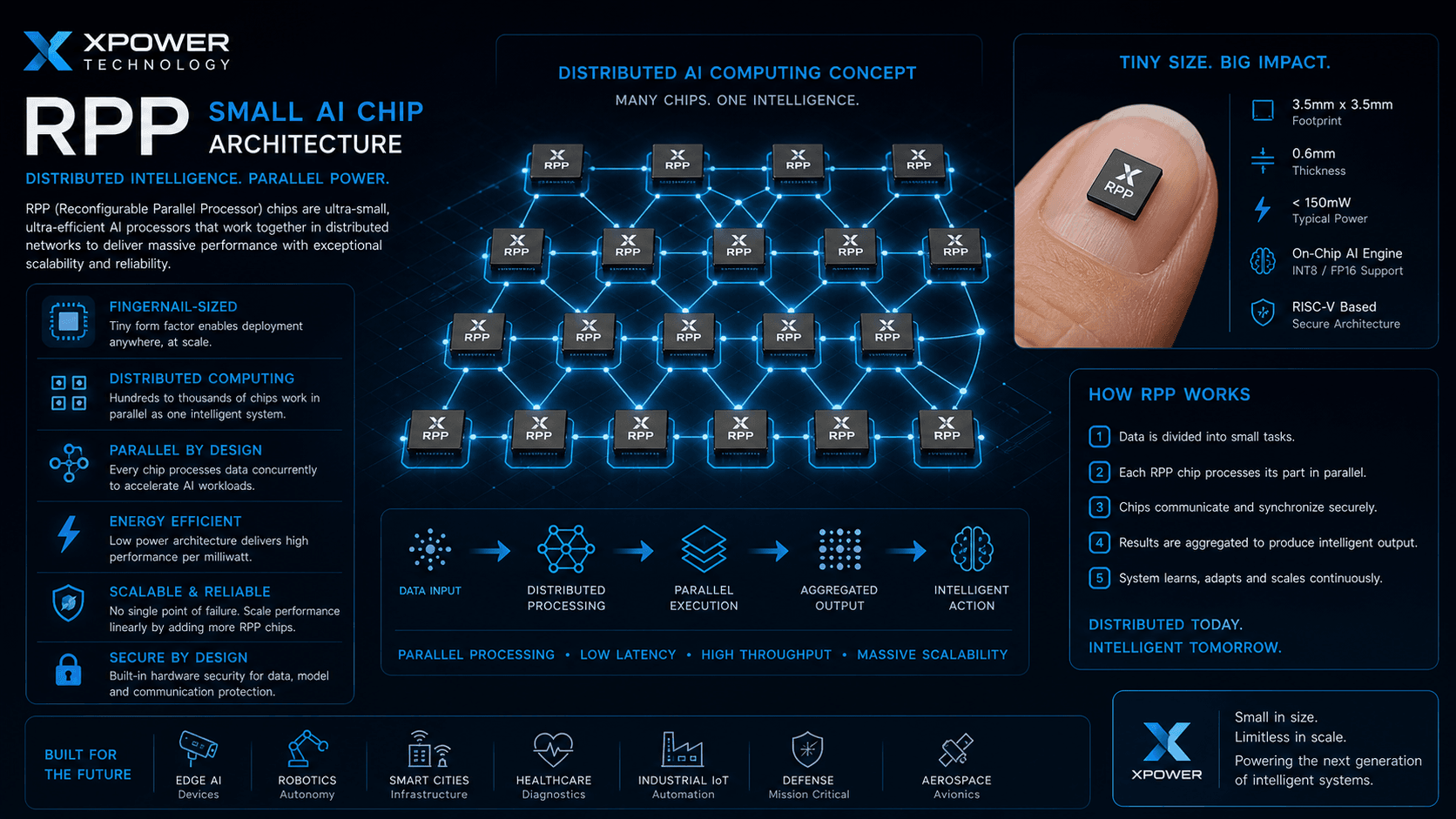
XPower Technology has introduced its RPP architecture AE7100E chips at the World Artificial Intelligence Conference (WAIC). These chips are remarkably small, described as fingernail-sized, with the capability to fit 12 units on a single card. The company claims these chips can support models ranging from 400 billion to 1.6 trillion parameters. A key feature highlighted is their use of distributed computing to achieve efficient AI inference. XPower Technology asserts that this approach allows their chips to compete with larger, more established designs, particularly in terms of cost per token processed. This innovation aims to disrupt the conventional approach to AI hardware, which often relies on larger, more power-intensive chips for demanding computational tasks.
XPower Technology's RPP architecture presents an alternative to the prevailing trend of increasingly large and complex chips for AI inference. By emphasizing distributed computing on smaller, potentially more numerous processors, the company is targeting efficiency and cost-effectiveness. This approach could democratize access to AI computation, especially for parameter-heavy models, by lowering the barrier to entry. The long-term viability will depend on the scalability of this distributed system, its energy efficiency at scale, and its ability to maintain performance parity with monolithic architectures as AI models continue to evolve. The market will observe whether this architectural shift can overcome the established network effects and performance benchmarks set by larger chip manufacturers over the next decade.
AI-generated to prompt reflection — not editorial opinion, not advice, not a statement of fact. How this works.