Yellow Ipê Trees Bloom, Beautifying Rio Branco at the Start of Amazonian Summer
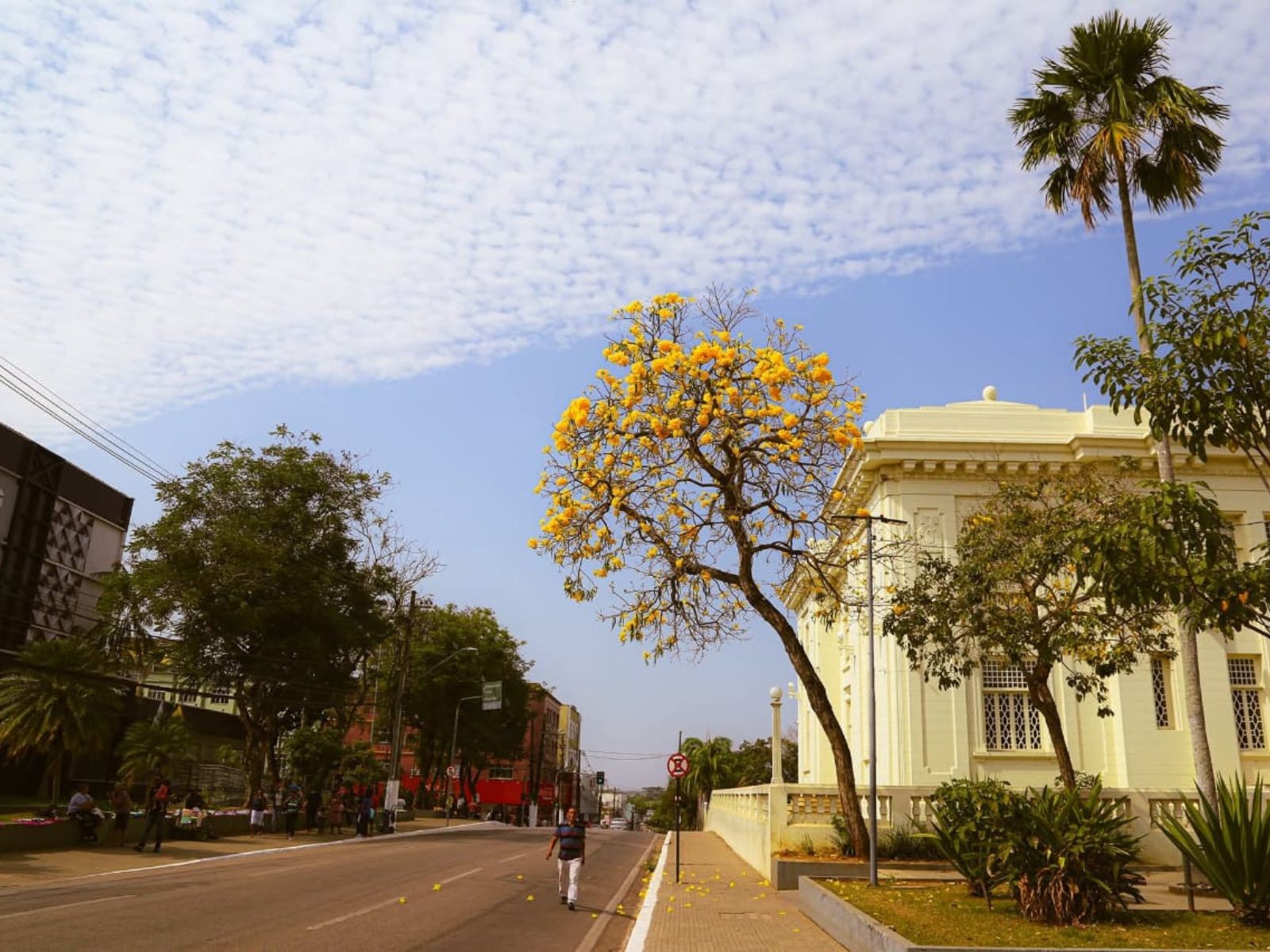
The arrival of the Amazonian summer has brought a striking visual transformation to Rio Branco, the capital of Acre, Brazil, with the blooming of yellow Ipê trees. These vibrant trees have colored the urban landscape, drawing the attention of residents and visitors alike. As their petals fall, they create a golden carpet on the ground, extending the natural spectacle for several days. The daily rush of city life is now framed by this natural and poetic beauty, enhancing the city's main avenues and central medians.
Financial consultant Daniel Albuquerque and architect Ana Rita from Porto Alegre, RS, were among those captivated by the sight, with Rita noting the unique magnificence of the Ipê compared to what she sees in Southern Brazil. Dr. Davi Borges das Chagas, a botany expert, explained that Ipês bloom during the dry season to facilitate seed dispersal when the rains arrive. The seeds, equipped with small 'wings,' are carried by the wind and can remain dormant for up to four months before germinating. This blooming cycle underscores the importance of natural processes and the preservation of Amazonian biodiversity. The Ipê, reaching 20 to 30 meters in height in the Amazon, seeks sunlight amidst dense forest.
Dr. Borges also clarified that not all yellow-flowering trees are Ipês, distinguishing them from the Faveira. While both bloom in the dry season, Ipês have larger, more intense yellow flowers and bell-shaped blooms, whereas Faveiras have smaller, lighter yellow flowers and umbrella-shaped inflorescences. The Ipê's leaves are compound and shed before flowering, while Faveiras have fine leaves forming a wider canopy. The Ipê flower was officially recognized as a national symbol of Brazil in 1961, celebrated for its presence across all regions and its significance among native flora. The Ipê's bloom, coinciding with the Amazonian summer's dry spell, signals the shift in seasons, transforming Rio Branco's urban scenery.
The vibrant blooming of Ipê trees in Rio Branco, a natural phenomenon tied to the region's dry season, offers a moment of aesthetic appreciation and a reminder of ecological cycles. This event highlights the interplay between climate, plant biology, and urban landscapes, where natural beauty can enhance public spaces and attract attention. The distinction made between Ipês and Faveiras underscores the complexity of local biodiversity and the importance of accurate identification. From a systems perspective, the Ipê's reproductive strategy, relying on dry conditions for flowering and seed dispersal, illustrates a species' adaptation to environmental cues. The cultural significance of the Ipê flower as a national symbol further connects natural events to national identity. As urban development continues, integrating and preserving such natural displays becomes crucial for maintaining ecological health and enriching the human experience within cities, offering a counterpoint to the built environment and prompting reflection on nature's resilience and beauty.
AI-generated to prompt reflection — not editorial opinion, not advice, not a statement of fact. How this works.