Yemen Govt Strikes Houthi Bases After Truce Collapses
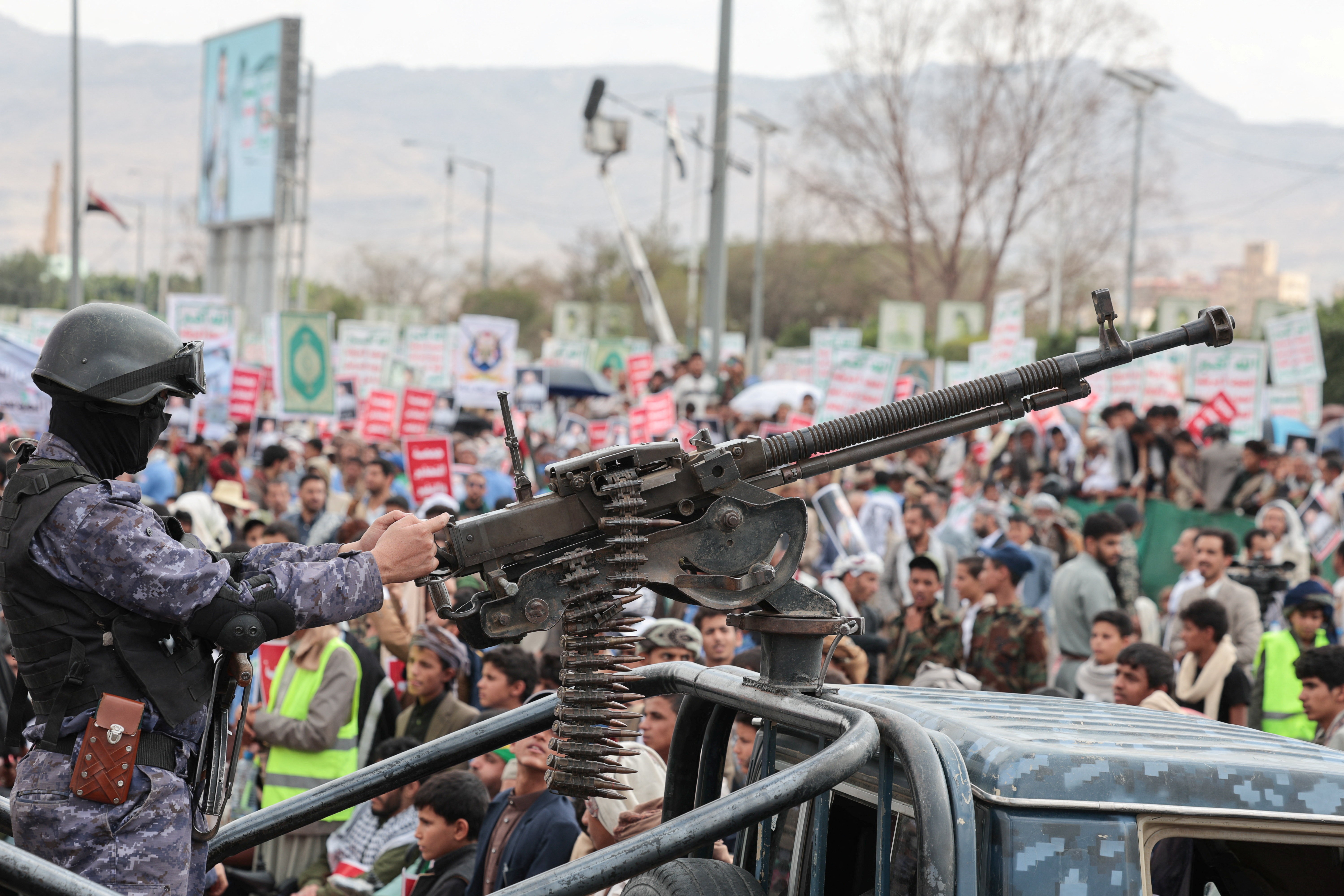
The Yemeni government's air force conducted airstrikes on Saturday, February 25th, targeting Houthi missile and drone launch sites and weapons depots in Marib and al-Jawf provinces. These strikes represent some of the first government offensives against the Iran-aligned Houthi group since a four-year truce with Saudi Arabia ended. The Houthi group, which controls northern and western Yemen, is considered a rebel faction by Saudi Arabia, the United States, and much of the international community. The conflict in Yemen began in 2014 when the Houthis seized the capital, Sanaa, leading to a Saudi-led coalition intervention in 2015. This intervention escalated the civil war into one of the world's worst humanitarian disasters. An UN-mediated ceasefire in April 2022 largely halted major offensives, and an informal truce persisted for approximately four years, characterized by frozen front lines. However, this fragile peace began to erode this month, marked by Iranian flights to Yemen's capital, Yemeni/Saudi government attacks on the city's airport, Houthi retaliation against Saudi Arabia's Abha airport, and threats of Red Sea blockades. On Friday, February 24th, Saudi Arabia also conducted strikes on the Yemeni port city of Hodeida, stating they targeted Houthi military positions threatening commercial shipping in the Red Sea. This follows Houthi claims earlier in the week of attacking two Saudi oil tankers, which they alleged violated a rebel-imposed naval blockade at the entrance to the Red Sea. The Houthis control key areas and have announced a naval blockade against Saudi Arabia, reportedly in support of Iran, potentially opening a new front in the war. This blockade directly impacts the Bab el-Mandeb Strait, a crucial waterway connecting the Red Sea to the Gulf of Aden and the Indian Ocean, through which millions of barrels of Saudi oil are transported daily to Asian and European markets. This route has become a vital alternative to the Strait of Hormuz, which has seen significantly reduced traffic since the war began. Reports indicate Iran has supplied military personnel and weaponry to the Houthis this month to bolster their blockade efforts and enhance their capacity to threaten Red Sea navigation.
The recent escalation in Yemen, involving government airstrikes and reciprocal Houthi naval actions, signifies a breakdown of the extended informal truce. This renewed kinetic activity, occurring against a backdrop of regional geopolitical tensions involving Iran and Saudi Arabia, highlights the persistent instability in the region. The strategic importance of the Bab el-Mandeb Strait for global energy transit means that actions impacting its security carry significant international economic implications. Future developments will likely depend on the interplay between internal Yemeni dynamics, the broader Iran-Saudi rivalry, and the responses of international powers concerned with maritime security and humanitarian outcomes. The sustainability of any de-escalation will hinge on addressing the underlying grievances and power struggles that fuel the conflict.
AI-generated to prompt reflection — not editorial opinion, not advice, not a statement of fact. How this works.