Yogendra Yadav Interview: Movement Gave Birth to New Leaders, Opposition Played Its Role
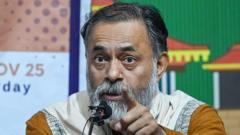
In an interview, Yogendra Yadav discussed the impact of a recent movement, questioning whether its scope was limited to a single minister's resignation or if it influenced the politics of both the government and the opposition. Yadav suggested that the movement fostered the emergence of new leaders. He also commented on the role played by the opposition during this period. The discussion aimed to assess the broader political ramifications of the movement beyond its immediate demands. Yadav's perspective highlighted the transformative potential of such public actions on the political landscape. He emphasized that the movement's influence extended to shaping the discourse and actions of established political entities. The interview sought to understand the long-term consequences and the lessons learned from the movement's trajectory.
This movement appears to have served as a catalyst for leadership development within civil society, potentially altering the dynamics of political engagement. By fostering new leaders, it may challenge existing power structures and create alternative avenues for public participation. The opposition's involvement, as noted, suggests a complex interplay between grassroots activism and established political parties, raising questions about strategic alignment and potential co-option. Examining the incentive structures for both new leaders and established parties will be crucial in understanding future political landscapes. The long-term impact will likely depend on the sustainability of these new leadership formations and their ability to navigate the evolving political and technological environment of the next decade.
AI-generated to prompt reflection — not editorial opinion, not advice, not a statement of fact. How this works.